
Category: Recommended Reading
THE OTHER ALEXANDER THE GREAT
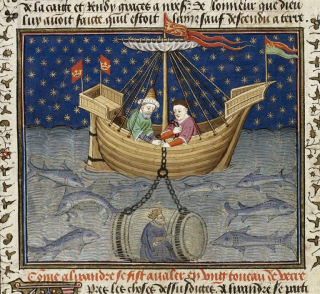
Amelia Soth in JSTOR Daily [h/t: David Schneider]:
In the centuries after Alexander the Great’s death, a family of stories emerged. They star a fantastical version of the famous conqueror. He seeks unfettered exploration, unlimited knowledge, and (most importantly) eternal life. These stories revolve around Alexander’s failures, not his victories, and the portrait that emerges is strangely poignant. These Alexander stories offer like a dreamlike vision of human struggle, one cast in strange, dazzling colors.
This version of Alexander originates from the Historia Alexandri Magni, written by an unknown author in the 3rd century. As these stories were retold, they blossomed into a literary and folkloric tradition. There are Arabic versions of the tales, as well as Greek, French, English, Egyptian, Mongolian, and Persian versions, one of which includes a romance with a mustachioed, club-swinging warrior princess. The historical Alexander may have won battles, but the Alexander of legend conquered hearts.
What unites these tales is Alexander’s obsession with exceeding the limits of human existence, his irrepressible desire to visit other worlds. But the tales are also tinged with melancholy. Those who read and heard the Alexander stories knew what would happen at the tale’s end: that he would die with his work unfinished; that, after his death, his empire would dissolve. This sadness hangs over the stories like an ill omen.
More here.
Can Civilisations make sense of art when we have different ways of seeing?

Never again will a single story be told as though it were the only one.” So says Giovanni in John Berger’s 1972 Booker prize-winning novel G. The line became an epigram to both Michael Ondaatje’s novel In the Skin of a Lion and Arundhati Roy’s The God of Small Things. It could also be an epigram to the new BBC series Civilisations, which began last week.
Presented jointly by Simon Schama, Mary Beard and David Olusoga, it has been heralded as the remaking for a new era of Civilisation, Kenneth Clark’s landmark 1969 series. The ghost that hovers over Civilisations is not, however, that of Clark, but that of Berger. Three years after Civilisation came Berger’s series Ways of Seeing. “The relation between what we see and what we know,” he tells us in the opening scene, “is never settled.” It was a direct riposte to Clark.
For Clark, every artwork embodies unique qualities and an inherent meaning that has to be drawn out and explained. For Berger, the meaning and worth of art rests not just in the frame or the marble but also in the relationship between the viewer and the object. Meaning is not intrinsic but emerges only in the viewing. At different points in space and time, and from different vantage points in any society, Berger insists, the meaning of the same work of art will necessarily be different.
More here.
Tuesday Poem
Whistling Mummy
Noise in the shape
Of words whistling
Contorted into
Breath that smells
Of death approaching
Slowly sour
Patching memories
Only she can enter
DarklyMummy no longer
She’s an old woman
Without teeth
Who makes strange
Mockery of a love
Strained in the
Best of timesMonsters are
Our shadows
On walls etched
With the grief of
AngerI find I cannot
Leave anything
Behind I fear
Neither can
SheWho must be
Obeyed
In this broken
World we
Share I
Wonder if death
Will break us
apart shatteringComfort
a thought which
Is also a
Hope
The ties that bind
might set us both
Free as sheWanders into
My dreams turning
The lock each nightEvery night
I hold my breathWondering how long
She canby Fawzia Afzal-Khan
Pakistani province plants one billion trees to help slow down effects of global warming
Jeff Farrell in The Independent:
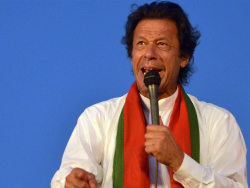
…Experts at World Wildlife Fund-Pakistan, which is monitoring and auditing the tree-planting effort in Khyber Pakhtunkhaw, say the project has been an environmental, economic and social success, with one of the highest survival rates of trees in the world, ranging from 70 to 90 per cent. “If the trend continues, there will be more birds, there will be more microbes, there will be more insects, so there will be more animals, so more habitats. The ecosystem will kind of literally revive in certain places. There will be more rains because we do need rains,” Hamaad Khan Naqi, WWF-Pakistan’s director general, VOA news reported.
More here.
Amartya Sen on Asma Jahangir
Amartya Sen in The Wire:
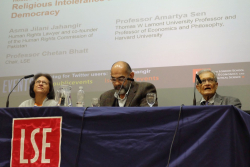
As it happens, Asma Jahangir’s first legal victory came before she became a trained lawyer. She won a great legal victory in freeing her father, Malik Ghulam Jilani, the parliamentarian and critic of the military, who had been unjustly incarcerated by the government. At the time of her victory at the Supreme Court (in a case celebrated as Miss Asma Jilani vs the Government of Punjab), Asma was barely 20 years old. Later, with professional legal training and far-reaching vision, combined with her exceptional intelligence, Asma became the leading defender of human rights in Pakistan, in the company of other great human rights activists like I.A. Rehman and Dorab Patel. It is extraordinary to see how much the Pakistan Human Rights Commission has achieved in the cause of justice, without even having the firm legal – and constitutional – status that, say, the Indian or the South African Human Rights Commission can comfortably rely on (those commissions have a much easier job than the Pakistan Human Rights Commission, which – despite that legal handicap – has achieved no less, particularly through powerfully mobilising public opinion and involvement).
I personally think that in understanding Asma’s success, it is important not only to appreciate the strength of her skilled arguments, her trained reasoning and her deep-rooted courage, but also the tremendous warmth of her personality including her radiating friendliness. She generated enthusiasm across the world, but particularly on the two sides of the sub-continental divide. Asma was loved in Pakistan, but no less in India, and whenever she gave a talk in India, the room – whatever its size – was always overfull.
More here.
Monday, March 5, 2018
Humanities Professors are True Conservatives
by Paul North
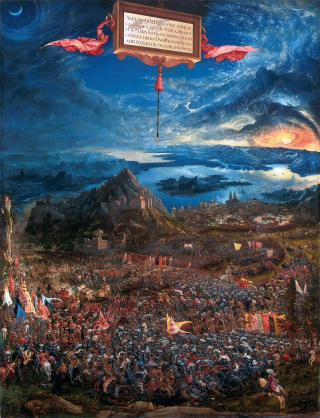
Humanities professors are way ahead of the curve on this kind of thing. A rambunctious student wants to debate current events: a humanities professor blinks and says "well…it wasn't always that way." Thank goodness for the delaying, retarding, preserving "well…"! Humanities professors use the opening that a strategic "well" gives them, in order to talk about how it was.
Well…
Why don't we ask what it was to be conservative.
A classics professor dusts off a volume of Cicero and finds these words:
pro di inmortales, custodes et conservatores hujus urbis atque imperii.
Oh immortal gods, protectors and preservers of the city and the empire.
It is a cliché phrase, really. Cicero repeats it from old political chatter.
Still, it's a huge claim—who is the conservative? The gods conserve the city and the empire. Cicero has heaven in mind, the classics professor a much smaller thing. Not gods or empire—words are what's important. Who conserves Cicero's words? The classics professor of course. a conservative of the highest order, the professor nonetheless is faced with a hard question. What do Cicero's words preserve? Here is the real crux of the matter. For there are two words here, "protectors" and "preservers." What is the difference? Something is being said in the contrast between the two. The difference will help us say what it was to be conservative. Conservatores differ from custodes, though here they are put together. To know what it means to be a conservator in old Roman republican wisdom then, we also need to know what it means to be a custodian. Gods are custodians: they protect the city from inside and outside, keep it safe from tyrants and from enemies, and they carry out this protection for the purposes of preservation. Gods protect the city in order that the city may endure as it is, as it was.
Dred Scott Strains the Mystic Chords
by Michael Liss
We are not enemies, but friends. We must not be enemies. Though passion may have strained, it must not break our bonds of affection. The mystic chords of memory, stretching from every battle-field, and patriot grave, to every living heart and hearthstone, all over this broad land, will yet swell the chorus of the Union, when again touched, as surely they will be, by the better angels of our nature.
—Abraham Lincoln, March 4, 1861, First Inaugural Address
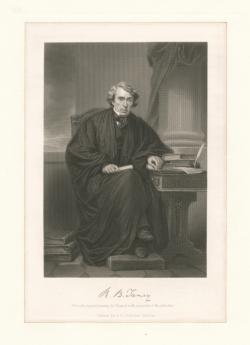
Dred Scott was born a slave in Missouri, owned by an Army Surgeon named Emerson, who often traveled to new postings. For roughly a decade, they lived in Illinois, a state where slavery was prohibited by both the Northwest Ordinance and its own constitution. Later, Dr. Emerson was posted to Fort Snelling in Minnesota, then a territorial area where slavery had been forbidden by the Missouri Compromise. They finally returned to Missouri, and, after Emerson died and “title” to Scott passed to new owners, he sued for his freedom and that of his wife and children. Scott won at the trial court level, then lost in Missouri’s Supreme Court. At that point, he turned to the federal courts. Finally, in 1856, the matter reached the U.S. Supreme Court. The question was achingly simple on a human level, yet agonizingly complex from a public policy perspective: Was Dred Scott entitled to freedom by virtue of the amount of time spent in free areas? Scott contended he was. Scott’s master insisted that a “pure blooded” African and descendent of slaves could never be a U.S. citizen, and so therefore was not qualified to access the U.S. courts. The case was argued in February of 1856, then reargued en banc that December to specifically address two key points.
No one would argue with the idea that the issues were timely. Slavery was always timely; it was the intractable, incurable American Original Sin. The Constitution itself was jury-rigged to accommodate it, with painful concessions to which neither side ever fully reconciled itself. Conflicts arose continuously, not just over the Peculiar Institution itself, but by anything that it touched—internal improvements, trade and tariffs, even foreign policy. Every few years there would be a flare-up, sometimes resolved by quiet compromise or concession, sometimes by grand bargains, sometimes, as in the case of the South Carolina Nullification and Secession crisis, by the application of a combination of Jacksonian tact and Jacksonian brute force.
And still, it went on. Lynchings, raids, arson, smashing of presses, intimidation. The country seethed, quieted down, then seethed again. Preachers read from different sections of the Bible to claim spiritual support for their sides. Politicians alternated between bile and eloquence; newspapers wrote inflammatory, pointless editorials; and Congress debated endlessly.
Monday Poem

Astronomer
—for Owen
.
I unclip the latches of your seat
lift and pull you from the car
into full light, into the light of the thing
which dimples the gauze of space
and holds you in that cup
like a ball in a ring of roulette
in my arms you turn,
and from the cuff of your coat,
shoot your finger east at the pale face
of second-hand light hung in blue
and bay “Moon!”
the way I cry “Improbable!”
but you are two and I am
much closer to the gate of
utter space
.
Jim Culleny
3/2/18
Now’s Your Chance To Become Fully Film Literate: Check Out The Ingmar Bergman Retrospective Running In Many Cities During His 100th Birthday
by Evert Cilliers aka Adam Ash
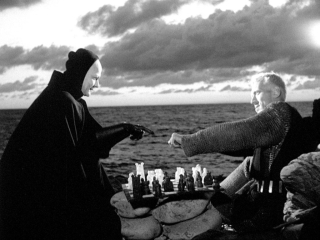
Bergman is one of my all-time heroes, along with Nelson Mandela, Bob Dylan, John Lennon, J.M. Coetzee, Matisse, Anselm Kiefer and not many others.
Here is my take on my all-time favorite film-maker (other just-below-Bergman favorites include Visconti, Dreyer, Billy Wilder, Orson Welles, Renoir, Tarkovsky, Ozu and Bela Tarr).
And if you live anywhere in or near Manhattan, go see Bergman's movies playing at Film Forum now (more about the nine not-to-be-missed ones later).
1. ALL-TIME GREATEST FILMMAKER
People say Bergman's films were bleak. What they should really be saying is that all other films are sentimental.
One might go further: Bergman was an artist; all other filmmakers are boulevardiers.
Let's not pull our punches here: in writing we have Shakespeare, in music we have Beethoven, in painting we have Picasso, and in film we have Bergman. Unlike any other filmmaker, he belongs in the pantheon of humankind's greatest artists.
I count myself lucky: Bergman made his films in my lifetime. I could live my life waiting for the next Bergman film, like I spent my teens and twenties waiting for the next Beatles album. I am happy to have been alive when these two giant entities were doing their work, experiencing the same good fortune of those lucky Londoners who went to see Shakespeare when he was doing his work, those Germans who heard Beethoven and Mozart at the time they were creating their music, and those Parisians who went to Picasso's shows while he was painting away in their hometown.
I have Woody Allen on my side: "There's no question in my mind that Bergman is the greatest of all filmmakers. No one else even comes close. His accomplishment is that immense. He is the only movie director to ever probe the human psyche on such a profound level. He's the first director to dramatize metaphysical issues. His body of work compares to Proust's cycle of novels or even the plays of Shakespeare."
perceptions
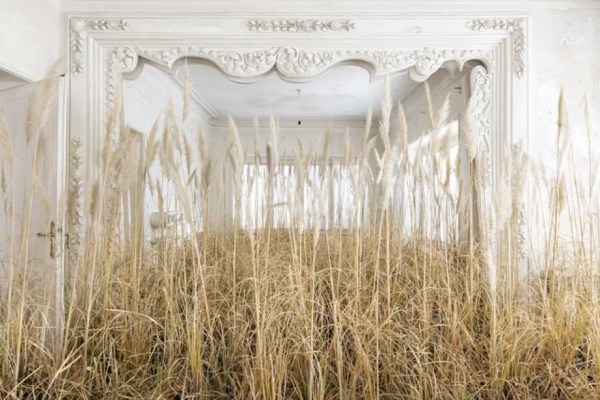
The Fiction of Pakistan in English
by Maniza Naqvi
The credit goes to the Karachi Literature Festival for getting this annual event started in Pakistan inspired by the Jaipur Literary Festival in India. In Pakistan all of these festivals include a few sessions for works of fiction, non fiction and poetry in Urdu, Punjabi, Sindhi, Baluchi and Pashto but predominantly the sessions are focused on English writing especially in Karachi, Lahore and Islamabad.
The number of novels written by authors of Pakistani origin who write in English are increasing at an increasing pace. So that from three in the 1960s there are at least twenty whose novels were published in 2017. If I were to hand out awards for best novels in this category it would go to Osama Siddique, for his superb, succinct yet vast book Snuffing Out the Moon, and to Sami Shah for Fire and Earth Boy. With these exceptional debut novels, the two writers have changed the texture and tone of Pakistani English fiction.
The irrefutable evidence that possession and being possessed is the current state of Pakistani English literature can be found in The Djinn Falls in Love, a captivating collection of short stories edited by Mahvesh Murad and Jared Shurin. Included in this collection are spellbinding and riveting stories by new writers of Pakistani origin such as Sami Shah and Usman T Malik. Transformative? Yes.
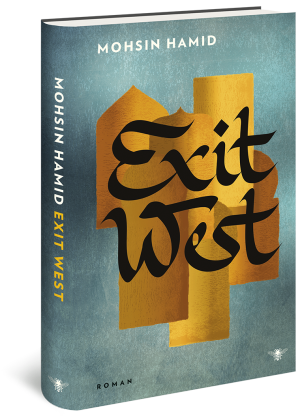
Most of the authors getting attention are those who emerged on the international scene and are on their third or fourth novel. Mohsin Hamid with Exit West and Kamila Shamsie with Home Fire, were longlisted for the Man Booker Prize in London in 2017. Hamid's The Reluctant Fundamentalist, too, was shortlisted for the Booker, in 2007.
From the Khyber Pass to the Great Black Swamp: a conversation with Dr. Amjad Hussain
by Shadab Zeest Hashmi
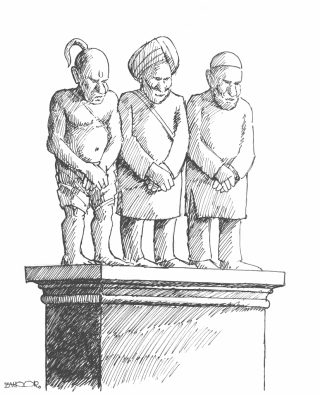
For years, nostalgia emerged only in poems or in snippets of conversation with my brothers, but around the time I had lived away from Peshawar for longer than I had lived in Peshawar, I began to draw maps from memory: earliest home, school, airport, TV station, Abasin Arts Council, Qissa Khawani bazaar, chowk yaadgaar, Peshawar club… the maps were eccentric, juvenile, and completely inaccurate. The best map of my Peshawar, was handed to me in the neat hand of my father.
Pondering beyond the intimate and focusing on the larger, global significance of the ancient city of Peshawar, as I researched the Silk Road cultures for a manuscript, I found myself irked and emotionally exhausted by the material generated by Western authors; I did not recognize the city in their writings. I continued hitting dead-ends until I came across Dr. Amjad Hussain’s work. As a distinguished cardiovascular surgeon/researcher and long-time academic, Dr. Hussain is well-known in the international medical community, but he’s also recognized as a photographer, an expedition-leader, a builder of interfaith dialogue, a journalist and author; it was quite a stroke of luck for me to receive a beautiful, handmade map of Peshawar from him, to read his publications in Urdu and English, his running journal from a recent Silk Road expedition and especially, to meet this true polymath belonging to my beloved city in person.
Our conversations crisscrossed myriad topics, as expected. For this particular email interview, I decided to capture a part of the wide range of things Dr. Hussain’s work encompasses.
CATSPEAK
by Brooks Riley
24 Things You Should Know about Pocahontas
by Akim Reinhardt
Amonute spoke an Eastern Algonkian (sometimes spelled Algonquin) language. While some Eastern Algonkian languages are still spoken, such as the Abenakian dialect of Mi'kmaq and the Delawaran dialect of Munsee, Amonute's Powhattan dialect is extinct. However, modern English retains several loan words from her language, including: hickory, hominy, moccasin, muskrat, opossum, persimmon, raccoon, terrapin, and tomahawk.
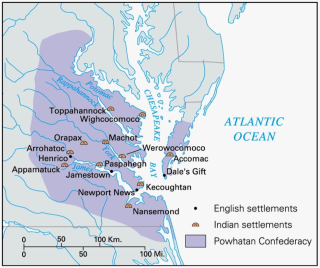
Amonute was not a "princess." This is a designation of European royalty, not Algonkian hereditary politics. But even if we use the word more colloquially, she still would not qualify, despite being the daughter of "royalty." Her father, Wahunsenacawh, was the werowance (leader/ruler) of a large Native confederacy in the southern Chesapeake Bay region. He is more commonly known by his throne name, Powhatan, which was also the collective name of his confederacy's people. However, the Powhatan people had a matrilineal society, and Amonute's mother was a commoner; thus, her daughter did not inherit any aristocratic lineage from Powhatan.
Amonute was about 9 years old when she first met John Smith, maybe a year or two older.
The story of her saving John Smith from a beheading by her father is a myth, nothing more than a colonial creation story. In later years, Smith published sensationalized accounts of his globe trotting exploits, and a literary theme he repeatedly invoked was stories of exotic and infatuated young women rescuing him from certain doom; it helped sell books. Smith's tale of Pocahontas saving him from execution does not appear in his initial reports, but only in his later, fantastic travelogues. The story also does not align with any known Powhatan diplomatic rituals. Furthermore, the idea that her father, the ruler of some 20,000 people over an area larger than the modern state of Delaware, would set vital foreign policy based on the impetuous whims of a nine year old is, at the very best, utterly laughable. Smith was indeed a captive whom Powhatan eventually adopted diplomatically as a "son" (akin to a vassal). But however Powhatan's diplomatic adoption of Smith unfolded, the young girl either played a minor, prescribed role, or more likely, was not even present. She was probably outside her father's great hall, tending to chores or playing with other children.
Dreaming of Al-Andalus
by Leanne Ogasawara
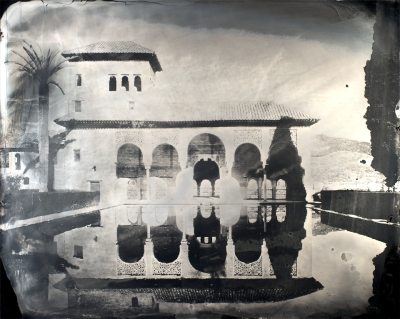
I'm not even sure where I first heard the name–and indeed, the name is like a one-word poem. A magical incantation; for it is enough just to say it–or better, to whisper it. Al-Andalus. I might have learned about the glories of Muslim-ruled Spain in a story by Borges I read as a teenager. It was about the philosopher Averroes. Have you read it? As far as I am concerned, it is the best story ever written. Born in Córdoba during the heyday of the Caliphate, Averroes (aka, Ibn Rushd) represented the golden age of Islamic Spain. This being a subject near to Borges' heart, he once said in an interview that he thought it fortunate his blindness came only after seeing the Alhambra–not before. Not surprising, this palace which moved him so deeply appears in several of his works; as al-Andalus itself became part of his vast fictional landscape.
So, back to Borges' story. Averroes, also known as the smartest man in the world, is utterly absorbed in the task of understanding Aristotle; indeed, so daunting is this challenge that it occupies him day and night for many years. Working one day on a particularly tough problem, he realizes to his great annoyance that his work will be interrupted because he has dinner appointment that evening. A famous traveler it seems, who claims to have traveled all the way to the Kingdom of Sin, had arrived in Córdoba, and Averroes has been invited to dine with this traveler in the esteemed home of Mr. Farach, the city's great scholar of the Koran.
Poor Averroes. All he really wanted to do was continue working on Aristotle.
Working from a translation of a translation (since he could not read Syriac or Greek), Averroes' challenge was enormous. Hating to tear himself away, little did he know that the very question that had been troubling him in the work of Aristotle concerning the words comedy and tragedy, would become clear to him at last that very evening during dinner. However, before discussing the wonders of Cantonese theater, their conversation first turned to the rose garden in the palace. The Koranic scholar Farach asks the traveler about the roses of Hindustan; about which he notes that, "The learned Ibn Qutaiba describes an excellent variety of the perpetual rose, which is found in the gardens of Hindustan and whose petals, of a blood red, exhibit characters which read, 'There is no God but Allah, and Mohammed is his Prophet.'"
As a young teenager (I was probably 12 or 13 when I read the story), I was quite taken by the image à la Borges of scholars looking for the name of God in the rose petals. And I never forgot the story. Delightfully, many, many years later in Tokyo, a friend of a friend (who was also a great scholar at Tokyo University) told me over soba noodles and beer all about the time he fell in love with life one day when he gazed on the roses in the gardens of the Alhambra.
Sunday, March 4, 2018
The Puzzle Of Patriotism
Phil Badger in Philosophy Now:

Some people will find this idea simply outrageous. For them there is nothing accidental about nationality. Such people hold what I might call a ‘metaphysical theory’ of their identity: consciously or otherwise, they feel that a kind of spiritual thread connects together those who share a particular nationality so that they also share a set of mutual obligations and rights.
Not me. When I was about fourteen, the BBC put on one of its series aimed at educating and informing the population. In this particular case, the actors pretended to be philosophers such as Plato and Socrates. I suspect that the whole thing was a ghastly hamfest; but for me the important thing was that a toga-clad Socrates asked his pupil “How should men live?” Putting aside the inherent misogyny of the question, this was a crucial moment in my young life. First, the revelation that people actually asked questions like that was mind-blowing; second, the seed was planted that there could be an answer to it which pertained to humans in general and not just to those in my own community. At that moment, with deference to Socrates, I became a citizen not of a small town in northern England, but of the world.
In this article I’m going to do my best to get to grips with the idea of patriotism in the most generous-spirited manner I can muster. I will refrain (after now) from references to Dr Johnson, who opined patriotism to be “the last refuge of the scoundrel” and instead examine a trio of philosophical models of patriotism.
More here.
How An Ivy League Food Scientist Turned Shoddy Data Into Headline-friendly Studies
Stephanie M. Lee in BuzzFeed News:
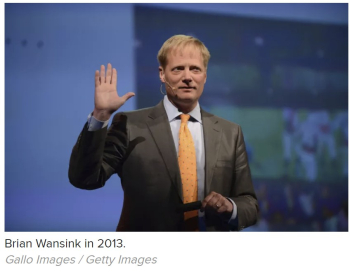
As the head of Cornell’s prestigious food psychology research unit, the Food and Brand Lab, Wansink was a social science star. His dozens of studies about why and how we eat received mainstream attention everywhere from O, the Oprah Magazine to the Today show to the New York Times. At the heart of his work was an accessible, inspiring message: Weight loss is possible for anyone willing to make a few small changes to their environment, without need for strict diets or intense exercise.
When Siğirci started working with him, she was assigned to analyze a dataset from an experiment that had been carried out at an Italian restaurant. Some customers paid $8 for the buffet, others half price. Afterward, they all filled out a questionnaire about who they were and how they felt about what they’d eaten.
Somewhere in those survey results, the professor was convinced, there had to be a meaningful relationship between the discount and the diners. But he wasn’t satisfied by Siğirci’s initial review of the data.
“I don’t think I’ve ever done an interesting study where the data ‘came out’ the first time I looked at it,” he told her over email.
More here.
Mark Lilla and the Crisis of Liberalism
Samuel Moyn in the Boston Review:
After 1968, disaster set in. Faced with the sins of Vietnam, the Democrats flirted with ending Cold War militarism only to double down on it. The critique of the welfare state, not the demand for its extension, prevailed. A toxic brew of white identity politics, a rhetoric of “family values” and “personal responsibility,” and, above all, anti-statist economics wafted across party lines. Fifty years later, Donald Trump is in the White House, embattled but victorious.
How did we get here? Much depends on how one narrates the path from 1968 to Trump’s election.
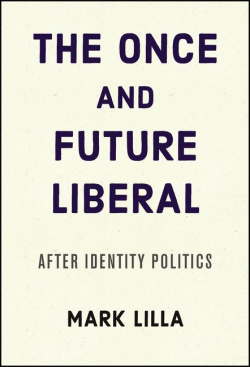
Mark Lilla’s book of last year, The Once and Future Liberal—a follow-up to his hugely influential New York Times op-ed “The End of Identity Liberalism,” published days after Trump’s win—has gone far toward defining the terms of that story. But instead of looking carefully at how liberal self-reinvention failed in facing down its scurrilous enemies, Lilla cuts off his enterprise in a dodge. Lilla thinks that U.S. welfare-state liberalism was doomed in the 1970s, when its neoconservative enemies rightly sounded its death knell. He goes on to report that the heirs of the raucous sixties, failing to reinvent liberalism beyond its prior statist limits, embraced the anti- and pseudo-politics of “identity.” For much of the book, indulging his Francophile proclivities, Lilla channels the moralist Alexis de Tocqueville, blaming our contemporary degeneration on a culture of narcissism, adding a whiff of the novelist Michel Houellebecq in unmasking the “real” legacy of the sixties as a journey into the interior. A cult of the self prospered as politics died.
More here.
On the Nature of Wine And the Cultural Contradictions of Artisanal Capitalism
Ted Nordhaus in The Breakthrough:
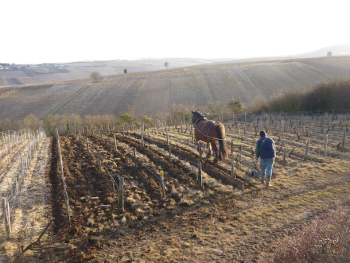
Giampaolo Bea’s family has made wine in the region for almost 500 years. He is one of the founders of Italy’s natural wine movement and evangelizes his craft, claiming to make wines that represent as pure an expression as possible of the fruit of the vine, with as little human intervention as possible. No synthetic pesticides or fertilizers are used in the vineyard. No chemicals are added during fermentation. He makes wines of exceptional freshness, and his wines have garnered a cult following among natural wine lovers around the world.
But a primitive operation Paolo Bea is not. Bea’s son Giampiero, an architect by training, designed the state-of-the-art winemaking facility. Clad in handsome white stone, the building could easily be mistaken for a modern art museum. Passively heated and cooled, the facility houses four stories, with two floors bunkered into the clay soils to keep the wines cool. Gravity moves the wine from the warm upper floors, where the grapes are crushed and the fermentation is started, through a series of troughs, pipes, and tanks to the lower floors, where the sediments are allowed to settle and the wines finish their fermentation and are aged in oak barrels for up to four years.
Bea may forgo the commercial yeasts that produce a more predictable fermentation and use minimal sulfur dioxide, the preservative that winemakers use to stabilize wines for shipment and sale. But it would be a mistake to assume that Bea’s methods are not technological. If anything, making natural wines that are consistently palatable requires greater precision and control than conventional winemaking.
More here.