
by Scott Samuelson
The Tortoise and the Hare
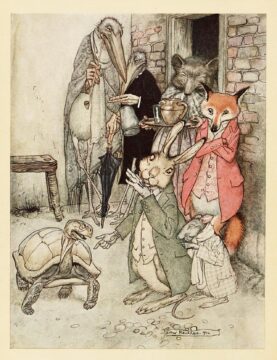
Once upon a time, a hare ridiculed a tortoise for not optimizing his speed. So, the tortoise challenged him to a race from one end of the forest all the way to the pond. “We shall learn how to do our work from the one who prevails,” the animals of the forest declared. The tortoise began to inch steadily toward the pond. The hare ran around among random trees, going nowhere in particular. The animals were so astonished by the hare’s speed they forgot that the finish line was the pond. Thus, all the animals of the forest dedicated themselves to innovative ways of running around aimlessly. When the tortoise eventually reached the pond, nobody was there to witness his triumph. All the other animals were busy working on assessment strategies, for on top of all their scurrying they had to fabricate reassurance that they were making progress.
Moral of the Story
Consider onboarding your pack with AESOP™ where they will learn the vital difference between assessment strategies and strategic assessment. Sign up now and get the early-bird rate on our Zoom workshop Scenario Planning for Dynamic Target Paradigms. Unlock your animals’ full potential to keep up with the hare!
The Boy Who Cried Wolf
Once upon a time, a shepherd boy cried “Wolf!” to get his town’s attention, even though no wolf was attacking his sheep. He did it more times than you can count. The townsfolk always ran to him and gave him the attention he craved. Half of them believed that wolves must be a grave threat. The other half were irritated by his antics and would cry “Wolf!” on the shepherd boy. In response, the shepherd boy’s supporters began crying “Wolf!” on his accusers. Now that the whole town was crying “Wolf!” it made sense for the shepherd boy to become their mayor. Under his leadership, most of the town’s sheep died. When a pack of wolves finally did arrive, they were disgusted by the town’s moral bankruptcy and moved on in search of something more substantial to eat.
Moral of the Story
Let your attention be captured once or twice by an attention-addicted shepherd with zero concept of the truth, shame on him. Pay so much attention to the corrupt shepherd that most of the sheep end up dying and even wolves look down on your town, you may as well keep giving him what he wants—at least until the end of his second term as mayor.
The Midas Touch
Once upon a time, King Midas was sad that he did not have even more gold than the piles and piles his serfs had mined for him. He prayed to the gods that all he touched would turn to gold. When the gods granted his wish, King Midas turned the plants in his gardens to gold. He turned the art on his walls to gold. He even turned his toilet to gold. When his hands touched his supper, the food on his plate turned to gold. When his daughter came in to complain about how all the flowers were dead, his embrace turned her to gold too. Now King Midas had a horrible problem. How could he get even richer with a surplus of gold and a dearth of investment opportunities? He asked his wizards to multiply his golden touch. They cast incredibly complex spells that enchanted his lords into pooling their gold so King Midas could invest it using risk management techniques to improve asset performance while simultaneously insulating returns from market decline. Now there was no limit on the gold King Midas and his lords could amass. It was a truly golden age but for the widespread destruction of nature, art, food, and children.
Moral of the Story
An unchecked golden touch will lead to the underemployment of low- and middle-income serfs, which could have adverse effects on Gold Domestic Product. Rather than getting rid of the golden touch, it needs to be reformed. Manors should shift some of their portfolio from short-term Midas-held profits to long-term investments in retraining serfs for the new gold-polishing economy. Also, lean in, ladies! Why should lords be the only ones on the golden toilet?
The Emperor’s New Clothes
Once upon a time, a country known for its fine clothing needed a new emperor, but none of its tailors or seamstresses wanted the job. They wanted to spend their time making clothes and teaching apprentices. When a hapless tailor was finally chosen as emperor, a group of conmen hatched a plan. They strutted around naked in front of him and convinced him that their clothes were so fine that only the wise could see them. The emperor proceeded to divert the country’s funds to their pretend clothing. But it was not enough that the emperor was always naked. The conmen wanted everybody to don their garments. All the actual tailors and seamstresses scoffed, “We shall never pretend to wear non-existent garments!” Their scorn enraged the emperor. He forced them all to be licensed to see and make fine clothing. At first, they played along. What harm could come in devoting otherwise productive hours to pretending to learn to make pretend clothes? When the emperor mandated that they incorporate so-called fine clothing across the curriculum of their apprenticeships, many clothiers suddenly began to appreciate it and even developed innovative ways to manufacture it. Holdouts against pretend clothing found it next to impossible to do their job. Now hardly anybody in the country makes or wears old-fashioned actual clothing. Clothiers and apprentices alike fight over whose pretend clothing is the finest. Was it all a hoax? A prominent school of thought holds that the old-fashioned clothing was the real hoax.
Moral of the Story
Apprenticeship programs should continue to embrace the ever-dynamic core values of Access, Excellence, and Integrity, but they should simultaneously prepare for the challenges ahead by concentrating their dwindling resources on Diversity of Apprentice Fees, Equity of Administrative Bloat, and Inclusion of Imperial Mandates Before They Are Mandated. Also, if you need a new pretend winter coat, buy it when they go on sale in early spring.
***
Scott Samuelson’s new book is To Taste: On Cooking and the Good Life.
Enjoying the content on 3QD? Help keep us going by donating now.