
Ohad Reiss-Sorokin at Los Angeles Review of Books:
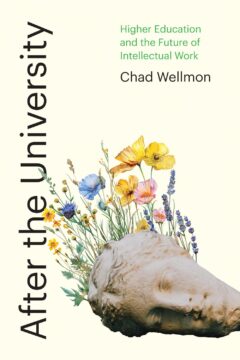 Chad Wellmon, a University of Virginia Germanist, also discovered that there are few people who care about what he cares about. In his new book After the University: Higher Education and the Future of Intellectual Work, he poses what is perhaps the most important question in the study of the modern university: “[H]ow is it that colleges and universities, institutions so obviously about knowledge and learning, are also so obviously not about those same things?”
Learning, he argues, fell victim to the university’s success. A niche institution in medieval times—the guild of teachers and students—the university gradually became an essential component of modern society. As they grew wealthier and more influential, their original function—fostering disciplined learning, according to Wellmon—was crowded out.
The story leading to the contemporary American university unfolds in three acts and begins in 18th-century Prussia. The philosopher Immanuel Kant believed that the university, reinvented as a “truth” factory, should be at the center of any enlightened society. Trustworthy knowledge was not enough, however. Prussia needed a class of trained professionals to staff its expanding civil service. In the 19th century, a liberalized civil service emerged, creating opportunities for the middle class. This raised a new question: how should society decide who should fill each position? The answer: a credential-based system, which came to replace the old system of inherited privileges. The truth factory turned into a credentialing agency.
More here.