
by Marianne Janack
The distinction between utopias and dystopias is often murky. In Ursula LeGuin’s story, “The Ones Who Walk Away from Omelas”, a utopian society is built on suffering; Lois Lowry’s The Giver portrays a world in which the absence of pain depends on the absence of choice; Aldous Huxley’s Brave New World portrays a world in which war, poverty and unhappiness have been eradicated because individuality and competition have disappeared.
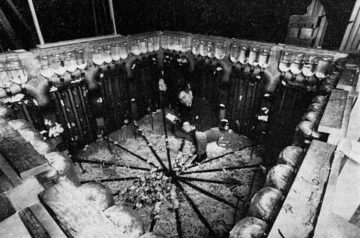
And then there’s John Calhoun’s experiment with mice. In 1968, Calhoun put 4 breeding pairs of house mice into a mouse utopia that came to be called Universe 25: no predators, plenty of space, lots of clean nesting material, more than enough food and water, weather control, and no disease. Calhoun housed the mice in a large enclosure that would allow them all to live and reproduce in peace, with plenty of resources and no dangers from predators or diseases. It took 104 days before the first litter of mice was born, but after that the population doubled every 55 days, until the population reached 620 on day 315. Calhoun called this Phase B: the phase during which the utopic conditions seemed to encourage population growth and happy mice.. After that, the population explosion slowed down, doubling every 145 days. It peaked at about 2200.
The asymmetrical patterns of nesting and reproduction that Calhoun and his assistants saw as the experiment ran demanded explanation. Calhoun said that the patterns were evidence of a social hierarchy among the mice: the more reproductively successful the mouse, the higher it ranked in the mouse society of Universe 25. The most dominant males were the most active, and had the greatest reproductive success. A pecking order of dominance and reproductive success was the best explanation for the asymmetrical nesting and reproduction patterns that Calhoun and his assistants noticed in the box “utopia.”
At the end of Phase B there were 150 adults and 470 juveniles. In their natural habitats, fewer of the juveniles would have survived. And that, it turns out, was where the trouble started.
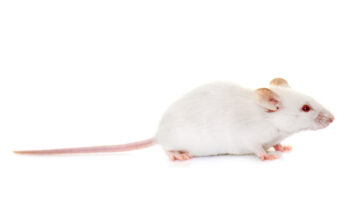
Calhoun made sure that no mice could leave the box; all of them had to find a way to live with the others. In the natural course of events, Calhoun explained, there would be more juveniles than were necessary to replace their older counterparts, but the excess juveniles who could not find their social niche would leave and would no longer have any interactions with their former neighbors and associates. But the mice who couldn’t find a place in the social system in Universe 25 couldn’t leave; instead, Calhoun said, they withdrew both physically and psychologically, and became inactive. Though they didn’t suffer attacks from other active males, they did suffer attacks from other inactive male mice. Unable to flee, they simply submitted to the attacks, and sometimes later became attackers themselves. Female counterparts of these inactive males withdrew to nest boxes that were less appealing to their reproducing sisters. Calhoun noticed that they didn’t seem to suffer from or initiate the attacks that characterized life among the unsuccessful males, but their withdrawal was no less antisocial, even though less violent. The male mice who showed this kind of antisocial behavior were subsequently compared to juvenile delinquents—a dispossessed population without goals or aims, who lash out with violence. Calhoun called them “drop outs”.
Eventually even the healthy and reproductively successful males became less active. They lost interest in protecting their harem of nursing females and broods. The nursing females became more aggressive in order to protect their nesting sites and pups, but sometimes that aggression was focused on their own pups. Some of these were forced to leave the nest before they were weaned; infant mortality climbed as pups were abandoned or forced to leave their mothers before they were ready. Eventually, deaths outnumbered births. In June 1972—nearly four years after the initial 8 mice had been placed in the utopia—there were 22 male mice and 100 female mice still alive in Universe 25.
Did the population rebound? It didn’t. The surviving mice weren’t fit for reproduction because they’d lost the ability to interact with their associates; the social dissolution led to the death of the colony. The young raised in the midst of the social dissolution never developed the behaviors that were necessary for successful mating and reproduction, even though they were physiologically normal. In Calhoun’s words, “their spirit has died.” The mouse utopia had become a dystopia. By 1973, the population had entirely collapsed: there were no mice left in Universe 25.
“I shall write of mice, but my thoughts are on man, on healing, on life, on evolution,” Calhoun wrote in his article about this experiment. His conclusion is sobering: while mice are simple, humans are complex, and yet “there is no logical reason why a comparable sequence of events should not lead to species extinction.” If opportunities to fulfill certain roles fall far short of the demand by those capable of filling those roles, who expect that they will do so, Calhoun warned, “only violence and social disruption of social organization can follow.” He closes with quotes from the Book of Proverbs: “Happy is the man who finds wisdom and the man who gains understanding/Wisdom is a tree of life to those who lay hold of her/All her paths lead to peace.”
Universe 25 was taken to show (by Calhoun and others) that population growth was a significant danger to humans; that like mice, humans required not just the satisfaction of their physical needs, but also something more—something threatened by overpopulation. Calhoun recognized that human beings live not only in physical space, but also in what he called “conceptual space”: humans can use ideas to creatively engage in changes, mine natural resources, and manage social relations. But, he warned, this expansion of conceptual space might also have a “breaking point”: population density might limit human abilities to use conceptual space to overcome the disappearance of opportunities and physical space. And it might lead to humans who can perform all the normal functions of biological life, but who lack creativity and cannot endure challenges.
In addition to debates about population growth, the experiment was thought to be relevant to urban planning, to the value of socialist and communist social organization, the desirability of feminism, the virtues of eugenics, the rise of the manosphere, and the increase in diagnoses of autism. And, of course, to the question about how and whether we might think of mice as proxies for humans.
Much of the discussion of the experiment assumes that it tells us something about human beings and their lives, but some critics say that the differences between humans and mice are significant and should make us think about whether and how to draw conclusions about human behavior and social organization from this experiment. Maybe human beings’ “conceptual space” plays a more important role than Calhoun seems to think it does.
Or maybe the analogy to physical space is misleading. If conceptual space is understood as the capacity humans have for understanding themselves; adapting to and with their environments; giving meaning to things, places, and other people; and, indeed, understanding what it means for an experiment to stand as a proxy for human behavior; then maybe it’s not limited the way physical space is. And maybe this means that an experiment with a mouse utopia is just an experiment with mice. Or maybe it means that an aspect of conceptual space and the wisdom that Calhoun talks about at the end of his paper about the experiment is the question of how utopias might turn into dystopias, and how humans ought to understand our relationship to the quest for knowledge, wisdom, and utopias.