
Conor McCarthy at the Los Angeles Review of Books:
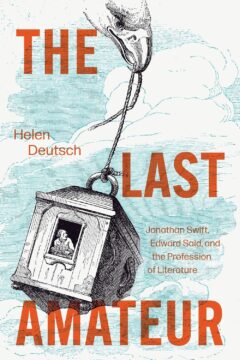 Twenty-three years after his early death, Edward Said remains a writer and thinker to whom many turn, and whose influence seems only to grow. We can measure this interest in various ways. For example, the volume of posthumous material published—most recently Said on Opera (2024), edited by Wouter Capitain, which collects Said’s 1997 Empson Lectures at Cambridge University—has been extensive. And the studies and monographs on Said keep coming: Timothy Brennan’s authorized biography Places of Mind: A Life of Edward Said in 2021, and Nubar Hovsepian’s Edward Said: The Politics of an Oppositional Intellectual last year. Two new books treat Said at length, albeit in radically different ways and in comparison with profoundly different precursors and interlocutors.
Introducing his Edward Said: A Critical Reader (1992), the late Michael Sprinker wrote of a senior academic colleague who told him he was “tired of the Said phenomenon.” This person clearly felt that Said’s fame, even then, owed more to notoriety and political controversy than to literary-critical originality or scholarly prowess. We can see now that this view was really just a matter of envy, since the academic responses to Said’s work have come in equal measure to the political reactions.
More here.
Enjoying the content on 3QD? Help keep us going by donating now.