
Sam Gee at The Hedgehog Review:
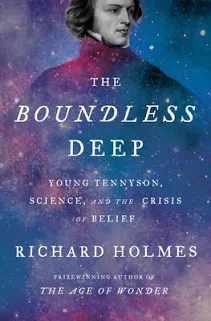 Of all the classic English poets, none is so unavailable to modern readers as Alfred, Lord Tennyson. I mean that both literally and figuratively. It is much rarer to walk into an American bookstore and find a copy of Tennyson’s poems than it is to find, say, comparable works by Shakespeare, Milton, or Keats. When I was preparing to teach a class on Tennyson last autumn, I was surprised to find that there are almost no secondary works on him still in print and affordable for students. Christopher Ricks’s Tennyson, first published in 1972, is still the leading critical study of the poet, and we have only three major biographies of the man, the first written by his grandson, and the most recent, John Batchelor’s Tennyson: To Strive, to Seek, to Find, a solid entry from 2012, is already difficult to track down. It is perhaps telling that Tennyson’s two most famous quotations are often misattributed to others: “’Tis better to have loved and lost than never to have loved at all” (to Shakespeare) and “Nature, red in tooth and claw” (to Darwin).
Why this oblivion for a poet once deemed a master? Tennyson’s eye for the evocative image (the “mouse / behind the mouldering wainscot shriek’d” in “Mariana”), his command of tone, and, above all, his perfect modulation of sound and rhythm were once considered unparalleled.
more here.
Enjoying the content on 3QD? Help keep us going by donating now.