
Catherine Fletcher at Aeon Magazine:
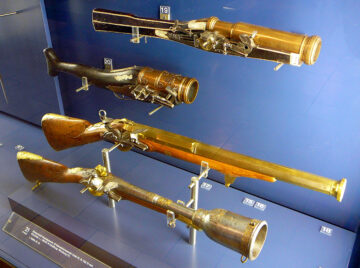 If you were asked to think of a gun owner, then Lorenzo de’ Medici – the celebrated patron of Renaissance art – would probably not be the first person to come to mind. In fact, however, Lorenzo ‘the Magnificent’ owned five portable firearms, which are listed in his 1492 postmortem inventory. Guns and gunpowder were controversial. In art and literature, they were labelled the Devil’s work, and were perceived as fundamentally unchivalrous. Yet within half a century, by the early months of 1539, Lorenzo’s descendant Duke Cosimo de’ Medici had 91 firearms in his Florentine storerooms. Somehow, in the courts of late-Renaissance Italy, the gun had become an acceptable, even valued, weapon.
Beyond the palazzi of the peninsula’s towns and cities, guns were also making inroads into more ordinary lives. There were no standing armies in the 16th-century Italian states. Their wars were fought through temporary mobilisations, and with considerable help from companies of mercenaries. Yet as the 1506 provision that established the Florentine militia made clear, ‘little hope’ could be placed ‘in foreign and hired arms’.
more here.
Enjoying the content on 3QD? Help keep us going by donating now.