
Philip Terry at The Guardian:
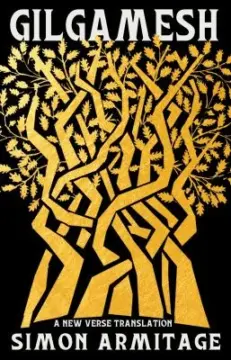 The poem’s uniquely fragmented history makes it both ancient and modern. Sumerian sources date back to 2000BC, but it remained lost until fragments of cuneiform tablets in a later Akkadian form were discovered by archaeologists in the 19th century. A tablet on display in the British Museum drew the attention of George Smith, employed by a firm that designed bank notes, and he repeatedly visited the museum in his lunch hour to gaze at it. When the keeper of Babylonian antiquities asked him what he was doing, Smith replied that he was reading it. Later, now in the employ of the British Museum, Smith was excited to discover a tablet describing a great flood. Crying “I am the first person to read that after 2000 years of oblivion,” he rushed about the room in a state of great excitation, and to the astonishment of those present began to undress. The passage Smith had deciphered comes towards the end of the poem, where Gilgamesh visits the now-immortal flood survivor Uta-napishtim – the poem’s Noah character – in an attempt to find immortality himself. It caused a sensation in Victorian England because of its similarity to the flood story in the Book of Genesis: here perhaps was evidence of the historical veracity of the event.
more here.
Enjoying the content on 3QD? Help keep us going by donating now.