
Jared Marcel Pollen at Poetry Magazine:
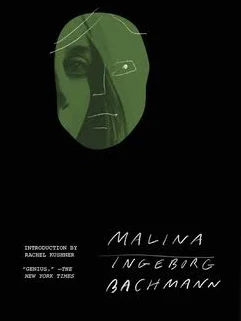 Anglophone poets are accustomed to enjoying an essentially uncomplicated and blameless relationship with their language. Every tongue is a tool of atrocity, deceit, ignorance, and oppression, certainly, but for an entire generation of German poets who grew up—and grew into their language—during the Nazi horror, the coinage, so thoroughly debased, must have seemed unusable. Adorno said no poetry after Auschwitz, but he just as well could have said “No more poetry in German.” Of course, we know from Primo Levi that there was poetry in Auschwitz, and that Paul Celan translated Shakespeare’s sonnets in the ghetto. It was Celan who would later remark that German had to pass through a “thousand darknesses of deathbringing talk” in order to be “enriched” again. Enriched is indeed the right word, for it evokes radioactivity. But it also suggests a sifting, a sorting-out, a knocking-off, and—crucially—a chain reaction.
It would take a generation of poets (and then some) to recover an unsullied idiom in which to think, seek, and write. The most charismatic among them, surely, was Ingeborg Bachmann, whose centenary is this year. Thomas Bernhard praised her as “the most intelligent and important” writer Austria produced in the 20th century and immortalized her in his novel Extinction (1986), where she appears as the character Maria.
more here.
Enjoying the content on 3QD? Help keep us going by donating now.