
Lucy Ives at The Poetry Foundation:
 The unsettling images in John Ashbery’s The Tennis Court Oath (1962) were collaged from lines found in a children’s book. I’ve often privately repeated phrases like “his Swedish copper forehead” or “the lake a lilac cube.” This language is hermetic and synesthetic. Beautiful and puzzling, it evokes impossible—or barely possible—forms of aesthetic experience, what is sometimes termed the surreal.
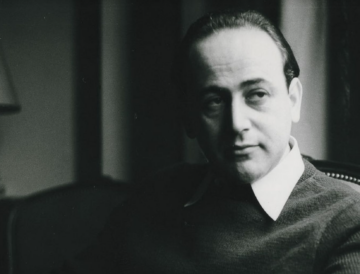
I mention Ashbery’s second book (for me, his best), as a way of suggesting, via analogy, what I cherish about a different poet. Ashbery’s weird pictures hint at some of the reverberating visual, spatial, and sonic effects of the poetry of Paul Celan, whose work is, at least on the surface, primarily fashioned from German. Celan’s writing constitutes an utter re-shaping of that language, equivalent, in its originality, to the invention of a fictional idiom, such as the alphabet of Thomas More’s Utopia (1516). But to say that Celan invented a sham German is wrong. Celan’s operations are neither positivist nor completist; they are instead a form of tuning.
More here.
Enjoying the content on 3QD? Help keep us going by donating now.