
by Nigel Worthington
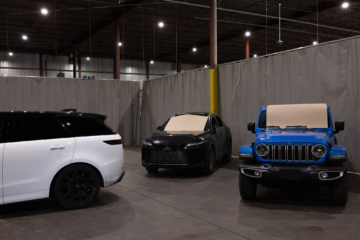 A yearslong car theft epidemic in Canada has gotten so bad that, despite a police crackdown, thieves break into homes just to steal car keys. Thousands of cars vanish each year.
The phenomenon, records and interviews show, is driven in part by an unexpected source: a booming black market for Western vehicles in wartime Russia.
While Western export bans have severed Russia from much of the auto market, they have not tempered the demand for brand-name SUVs and trucks. That has given rise to a sophisticated network of criminals that steals cars, hides them in shipping containers and sends them to Russia, often by way of the Middle East.
“A forbidden fruit is always sweet,” Daniil Aleynik, a Russian national, said during an interview from a Ukrainian jail, where he was being held on charges of participating in an international car theft scheme. “There are a lot of cars in Canada, and stealing them there is very convenient.”
Interpol, the international police organization, received 4,798 reports that stolen Canadian vehicles had been found in Russia from February 2024 to July 2026, according to data obtained by The New York Times and confirmed by two law enforcement officials who spoke on the condition of anonymity because it is considered sensitive.
Pickup trucks like Dodge Rams, Toyota Tundras and Ford F-150s are in particularly high demand.
The Interpol figures significantly undercount the problem, but Russia is by far the top international destination for Canadian cars reported to Interpol, according to the Royal Canadian Mounted Police.
The number of cars stolen from Canadian streets, parking lots and driveways is a measure of how Western sanctions have had surprising, and at times undesired, consequences. Just as a network of smugglers and dilapidated tankers expanded to evade oil embargoes, criminal groups moved to fill the void when Western automakers left the Russian market and many countries banned auto exports there.
“The stolen cars are not by chance,” said Renato Schipani, who oversees Interpol’s stolen vehicle database. “They are stolen to order.”
Demand for pricey Western cars has always been high in Russia. The sanctions unintentionally incentivized sellers to find illicit ways to supply the market, driving up prices and making the cars even more of a status symbol, Mr. Aleynik said at the Chortkiv detention facility in western Ukraine.
Law enforcement officials, including at Interpol, are investigating whether some of those trucks are being used in overseas battlefields. A propaganda video broadcast last year by a TV channel controlled by the Russian Defense Ministry showed a line of Dodge Ram trucks at a huge Russian drone factory. The video showed a drone being launched from the back of one of the trucks.
In Iran, satellite and open-source imagery reviewed by The Times appears to show Shahed drones on the back of Toyota Tundras. To date, officials have not tracked those vehicles.
The Interpol records are imperfect. Cars can sometimes inadvertently be counted twice, and some countries, including the United States, do not reliably report thefts to Interpol. Others do not report recovered cars. But law enforcement officials say the figures reflect trends and offer an important snapshot of how stolen cars move internationally.
Since Canada’s car theft epidemic began in 2021, officials have introduced policing overhauls and invested tens of millions in tackling the crime. Theft rates have fallen, but stolen vehicles still flow through Canadian ports.
“The majority of the high value vehicles are still being stolen for export — that’s where the money is,” said Bryan Gast, a former police officer who is now intelligence lead for the nonprofit anti-fraud group Équité Association.
Canadian officials recognized early that stolen cars were ending up overseas. But at first, they eyed the wrong countries.
‘The Wild West’
Car thefts surged in Canada after Covid lockdowns were lifted in 2021. With the global supply chain in turmoil, criminals spotted an opportunity. Within a year, auto theft rates in Canada had reached historic highs and continued to climb.
“It was the Wild West,” said Scott Cresswell, a detective at York Regional Police just outside Toronto. “People were having multiple cars stolen. Toronto would have been having 30 cars stolen a night.”
***
Enjoying the content on 3QD? Help keep us going by donating now.