
Ed Simon at the Paris Review:
 The philosopher’s stone, desired by alchemists for its mythic ability to transmute lead into gold, was once in Philadelphia. Johannes Kelpius—mystic, monastic, and magician—supposedly came into possession of said stone shortly before his death in 1708. But rather than letting it be acquired by less reputable occultists, he dispatched a confidant to throw it from Germantown’s banks deep into the water of the Wissahickon Creek or the Schuylkill, depending on which account you believe. The German-speaking Transylvanian was a character from a gothic novel—an apocalyptic wizard who (so it was claimed) lived in a cave where he transformed “darkness into light, death into life,” and “metals into gold.”
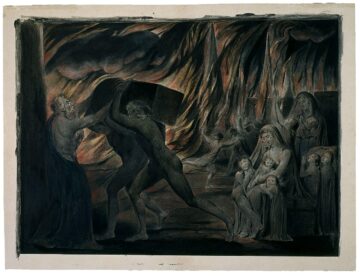
At the very end of that revolutionary century another Philadelphian had similar occult ambitions, albeit of a literary sort, in generating something new and glowing from the base materials of gothic literature. Charles Brockden Brown’s 1798 Wieland; or, The Transformation: An American Tale—frequently claimed to be the first novel published in the United States—begins with a religious iconoclast not unlike Kelpius who spontaneously combusts while worshipping in a temple overlooking the Schuylkill. Brown describes how a “faint gleam suddenly shot athwart” the temple, seemingly the result of some occult experimentation. “In a moment,” he wrote, “the whole was reduced to ashes.”
more here.
Enjoying the content on 3QD? Help keep us going by donating now.