
Chenoe Hart at Noema:
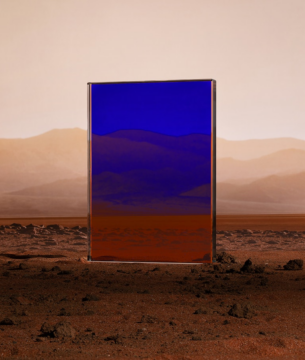 Human-only interfaces are already increasingly being used by both people and computers. But today’s interfaces are generally designed to assume a user in analog physical space is operating them. Skeuomorphic design reinforces this by representing a computer’s internal functions via physical metaphors. We access files via folders located on a desktop. Skeuomorphic graphics often proliferate during moments of technological change; embedding references to the past within the interfaces of new products can help with “easing the transition from the old to the new,” in the words of UX pioneer Don Norman. But skeuomorphism can also conceal a technology’s true nature: As the writer Clive Thompson advocated in a 2012 Wired article critiquing the early iPhone’s imitation paper and leather-stitched graphics, lingering on outdated metaphors could mean that “we’ll fail to produce digital tools that harness what computers do best.”
As today’s computers transition into being able to perceive our world, they appear to be seeing it through their own reverse skeuomorphic analogies. AI systems comprehend physical phenomena via existing computational metaphors.
More here.
Enjoying the content on 3QD? Help keep us going by donating now.