
by Mindy Clegg
Those who study history as a field of knowledge production (like myself) often differ in their understanding of what it is from the general public. Much of the public views history as entertainment or a boring list of names and dates, not anything critical to modern life. In some cases, its positioned as a mode of predicting what will most certainly come next. Historians tend to view history as more dynamic and in flux depending on the present. But where do perceptions of the past between the two groups diverge and is there a danger in that divergence?
I would argue that the difference is in how more popular perceptions understand the past as dead while those engaged in knowledge production view it as alive, speaking to us, demanding our attention to rethink the world around us. That disconnect is fed by popular historical narratives found in nationalist, teleological histories and by mass mediated narratives in film and television. For many, history is something back there, not something that informs us in the here and now. As such, the public is missing out on the power that understanding history in a more holistic way can hold. That does cause real problems as history for most isn’t something that is fully real nor something that can shape our understanding of what’s possible in the world.
Popular perceptions of the past rests in two ideas, that of inevitability of events of the past and the second is the objectification or flattening of the past. First, popular historical narratives tend to rest on the idea of a singular, teleological narrative, either progressive or sometimes cyclical, such as in Oswald Spengler’s Decline of the West. What happened, happened and that’s just fate. Nationalist historical narratives tend to embrace that framing along a continuum from liberal to fascist. The “nation” in these histories are an inevitable outcome of history or a body that has always existed in the past and will into the future. Messier aspects of the past are ignored or glossed over. Let’s take US history and the rise of modernity. Modern liberalism is seen as the inevitable outcome of the Enlightenment – a direct line from one to the other and the only real outcome that matters. The modern nation-state is an inevitable outcome of the historical process of the Enlightenment, in other words.
The way we think about the Declaration of Independence is one example, a document seen as a pinnacle of the Enlightenment itself. The American revolution is seen as influencing the French and Haitians as a larger part of the age of revolutions. However, other revolutionary movements are often less connected to the American one especially once Marx and Engels influence bring labor relations to the table. In the popular perception of the 19th century, the various socialist and nationalist uprisings in the mid-century becomes an aberration that led to one of the two great disasters of twentieth century, the Bolshevik and the fascist revolutions. But both socialism and race-based nationalism came out of the Enlightenment and shaped the modern world, as much as liberalism. Liberalism has been flattened historically in that view of history, stripped of any friction or problematic elements. As such, these revolutions (socialism, fascism) were ahistorical impositions. Socialists and fascists are aberrations from the “normal” course of history, but are the only ones with agency. The Enlightenment as an influential force in the development of the Atlantic world and eventually the whole world is imagined as only heading in one direction, rather than underpinning a variety of discourses with a variety of possible outcomes.
But for most people, capitalist liberal democracy was the destined outcome of the Enlightenment or the “end of history” in the words of Francis Fukuyama. Any other outcome must be a byproduct of humans fighting the natural course of history. We need to understand that historical processes are something that can be understood and attributed to human action and not a set of expected outcome of “natural” processes. History exists within human actions, not outside of it. Liberal capitalist democracy is no more inevitable than a fascist or communist state (or empires or no states at all). We can track how all three have roots in the debates of the Enlightenment, how all three ideologies overlap in some places and make similar promises to the public. The core question is always about how society should be organized for the best social outcome often for a specific group of people. All three create in-groups and out-groups that the public is meant to recognize and help police or to self-police. Most importantly is that all came from ideas developed by people, for people. Even as all three ideologies tend attempt to make their ideologies “inevitable” to differing degrees, we can look at history to disrupt that notion. Let’s take nationalism as an example, specifically Zionism. When we look back at the Holocaust, in the popular historical narrative and in the Israeli nationalist narrative, that horrific event plays a major role in making the case for the founding of Israel. That isn’t wrong as it certainly influenced the weight people gave to the Zionist argument, even as we often overlook the immediate aftermath of the Holocaust and how Zionists made a major push among Jewish Europeans just as they were at their most traumatized. In the most upsetting interpretations of Zionism, the Holocaust is even seen as a necessity to bring about the state of Israel (even among Zionist, this is an extreme position, it must be noted). This kind of mass violence, in this telling, is a historical engine rather than of choices made by people with power. The Nazis made the choice to embrace the demonization of Jewish Europeans in order to build power within Germany and then across Europe. Other European powers made the choice to downplay the extreme language used to talk about minorities within Europe up to the start of the war (in part because they were still animated in part by the “Jewish question”). And of course, Jewish Europeans made choices in the face of genocidal language and action. We rarely talk about the various reactions by different Jewish groups in part because Zionists dominate the historical understanding of the Holocaust, primarily to justify their actions in the Middle East. But as Molly Crabapple has argued in her new book Jewish Bundists in Eastern Europe (Russia and Poland) rejected the Zionist view and argued for fighting for rights where they lived. But such a focus on alternative ideologies among European Jews disrupts the nationalist understanding of the world, where each people “belong” to a spot of land on our good earth. Crabapple’s work shows that other worlds are indeed possible, and we can see that in the past as long as we can accept that what happened wasn’t inevitable.
The other point of division between historians and the general public is that of the objectification of the past, imagining the past as disconnected from us, dead to a certain degree. This is probably a bit harder to unpack, especially since it’s also a key aspect of historical training. We are told to write a story that is as grounded in facts and sources as possible, which is obviously a solid foundation for writing a historical narrative. But we’re also told to do so in as dispassionate a way as possible which can result in objectified and dead stories that often feel disconnected from the present. In doing so, we run the risk of dehumanizing those in the past, in the sense that we don’t think of them as people in the same way as us but characters in a story. We should acknowledge that its hard to understand the world that people in the past experienced. The people of the past are not us of course but we probably should not understand them as completely alien either. We should work to understand their specific context, which is a tougher proposition than just remembering important people and dates. If the past is a foreign country, we can make our way to understanding a foreign country to some degree. In the past few decades, historians have been working to inject humanity back into the historical narratives that inform us today, even if heated debates about the past and how to frame it animate our work. Let’s take the example of the competing views of two Holocaust scholars, Christopher Browning and Daniel Goldhagen. Both explored a single unit during the Nazi era known as the Reserve Police Battlion 101. They came to differing conclusions, based on the very same set of documents. Browning argued that the men in that unit, who carried out horrific atrocities during the Holocaust, were in part driven by a need to bend to authority and by peer pressure. It was not just their irrational hatred of Jewish people that led them to participate in the Holocaust. It complicates the story, and shows that such forces can be at work in almost any modern society. Goldhagen insisted on a more “sonderweg” thesis. He argued that German antisemitism was particular pernicious (eliminationist antisemitism) making Germans more willing to murder Jewish at scale. Germans come off in his narrative as just driven by their hate of Jewish people, flattening the events of the Holocaust and safely putting it into the past. One of these two narratives end up shaping our understanding off the events of the Holocaust more than the other. Just think of the ways that much of pop culture has used Nazis as a shorthand for evil rather than people carrying out act of evil. Hannah Arendt’s argument about the banality of evil falls to the wayside when we only see Nazis as cartoon villains. It allows us to distance ourselves from the violence of the modern world. After all, we’re not evil like those Nazis. This flattens the reality of how such an event could happen. It was something that could only have happened there and then, not in the here and now. That makes us less receptive to how these events can unfold in our own backyards or around the world.
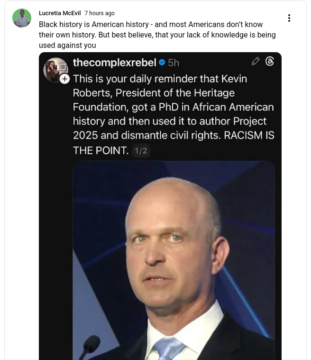
Omar El Akkad recently wrote with deep eloquence on the genocide in Gaza in his book One Day, Everyone Will Have Been Against This. By this he meant that when we look back on the events that spun out of the Hamas attack on southern Israel on October 7th 2023 none but the most hardcore justifiers of genocide will defend the willful and pointless murder of tens of thousands of Palestinians at the hands of the IDF. However we acted in the flow of events, we will all collectively understand it to have been bad, and we will distance ourselves rather than look at the structures that made this possible. This is much like how we think back upon the Holocaust in the popular imagination. Monsters did it, not people. No one will claim any sort of real responsibility for their positions they held as the genocide unfolded, much then as now. Or they’ll have been born well after the events in question and will have been fed a historical narrative that flattened everything. It will not reflect what it was actually like to scroll through endless acts of mass violence on civilians. Nor will the possible off-ramps that have appeared for decades prior to this atrocity be understood. What happened, happened and that’s just fate. We imagine that genocide is a normal part of the past and should just be accepted as such. Unless people take a class that immerses them in the nuts and bolts of what happened in Gaza, they’ll consume it in a line or two in a class on the 2020s if it even gets a mention at all. People won’t really understand what it was like to see the worlds first major live-streamed genocide. Maybe it will be remember more for that, the memeification of a genocide. A throwaway line in a textbook to bring home to damage of the social media and web 2.0 era. But we can find better ways to remember and honor the past, and draw lessons to make our world better. We can see alternatives and work to make them possibilities in the present. Doing that means we need to actually understand history in all its complexity. That means not just historians but everyone. That means treating humanities as something more than a luxury but as just as much of a core aspect of our education as reading, writing, and math. As the comment above from youtuber Lucretia McEvil argues, we should know our history in all its complexity in order to ensure a better future for all of us.