
by Rachel Robison-Greene
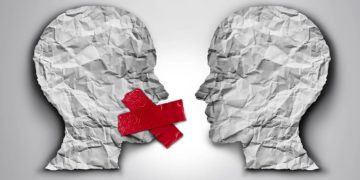
Many of my heroes were canceled. Hume was repeatedly denied academic posts as a result of his reputation for skepticism and atheism. Spinoza was excommunicated from the Jewish community of Amsterdam and cast out of the tribes of Israel with “all the curses of the covenant” for the positions he held. Socrates was executed by the Athenians for “corrupting the youth”, which was really just engaging them in conversation and motivating them to think critically. All of this is to say that what we call “cancel culture” is nothing new. People from all ages and cultures have been “canceled” to lesser and greater degrees for their speech and behavior.
“Canceling” people for their speech is sometimes more than acceptable—it’s morally required. When people use speech to commit crimes, we put them in jail. When Harvey Weinstein used his speech to sexually coerce and manipulate, he lost his liberty. We also provide protections for misuse of speech in the civil courts; people can be sued for libel and slander. When Alex Jones used his speech to spread falsehoods about the murder of children, he was successfully sued by the parents of the victims. Most of us think this is all as it should be.
The term “cancel culture” isn’t precise enough to be useful. This is by design. A broad term like this encourages us to be intellectually lazy and politically distracted. Some behaviors we are inclined to call “cancel culture” are pernicious and rightly criticized. Others are perfectly reasonable examples of people facing consequences for bad behavior.
The idea that freedom of conscience is connected to respect for human dignity is a great inheritance from Enlightenment thinking. Freedom of expression is closely related to freedom of conscience—our ability to believe what we want doesn’t go very far if we aren’t also free to express what we believe. Because our right to freedom of conscience feels about as personal as things get, it can be easy to think of oneself as an island when it comes to belief formation. That is, it is tempting to think that forming beliefs is something we do all on our own. Just me and my reasons. When we are “canceled” for our views, it can feel humiliating to our sense of personal dignity and self-worth.
It’s important to realize, however, that belief formation in most contexts isn’t individualistic; it’s deeply social. The norms in play aren’t simply epistemic—they’re not just the norms of knowledge—there are also social and moral norms at play. As the philosopher William K. Clifford puts it in The Ethics of Belief, “No one man’s belief is in any case a private matter which concerns himself alone…Our words, our phrases, our forms and processes and modes of thought are common property, fashioned and perfected from age to age; an heirloom which every succeeding generation inherits as a precious deposit and a sacred trust…”. We have obligations to one another as believers and as speakers. This recognition provides us with strong communal reasons to treat the range of behaviors that are often clustered together as “cancel culture” with the nuance that they deserve.
The internet generally and social media in particular has led to the unprecedented spread of misinformation. This is often dangerous. In the past, when social media companies have removed or flagged misinformation, that practice has been condemned as “cancel culture.” This raises a unique set of questions about whether all views, even false and harmful ones, should be allowed on social media platforms. Misinformation designations can have a political component, but the attempt to prevent the spread of misinformation is not always overtly political. Questions related to this form of “cancelation” belong in their own category.
The first thing that comes to mind when most people think of “cancel culture” might be the retribution of an angry mob—a person expresses a view, and a tidal wave of public rage and self-righteousness sweeps the speaker into oblivion. It makes sense to fear this kind of scenario. No one wants to be treated like that. It tends to plant the speaker securely in a defensive position. An additional question “cancel culture” poses is a question about how we ought to treat one another. Online attackers often fail to treat others with compassion, empathy, and respect. The emotions involved prevent us from asking the genuinely relevant questions about the issues at stake.
My home state of Utah has made the news recently and frequently for this form of “cancel culture.” Last year, when students learned that Charlie Kirk was planning to bring his “Prove Me Wrong” booth to campuses of Utah universities, limited public backlash sought to prevent it. Ultimately, Kirk was not prohibited from visiting campus by any Utah university.
More recently, author and educator Sharon McMahon was scheduled to be the commencement speaker at Utah Valley University. Though McMahon condemned the killing of Charlie Kirk, she also publicly criticized the positions for which Kirk routinely argued. As a result, some people loudly objected to her selection as speaker and were able to successfully prevent her appearance.
One way we could approach these issues is to bemoan cancel culture. Did people try to cancel Charlie Kirk? Did they cancel Sharon McMahon? These are distracting and profoundly unhelpful questions. We are already strongly psychologically inclined to form beliefs on the basis of tribalism rather than evidence. The easiest thing in the world is to cry “cancel culture” when there are consequences for someone with whom we identify politically and to ignore the situation entirely when we view the person in question as a political enemy.
While transfixed by “cancel culture” rhetoric, we miss the opportunity to reason together about what to believe regarding important social matters. We should, instead, be asking questions like, “what role do the state’s public universities play in public discourse?” and “what room should we make in educational spaces for controversial or unpopular ideas?”
A second form that “cancel culture” takes has wider ranging consequences. We are often so distracted by politicized interpersonal “cancel cultur”e online that we fail to pay sufficient attention to what our own elected officials are doing. Utah has made national headlines for this form of “cancellation” as well in the form of both direct and indirect censorship.
The philosophers John Stuart and Harriet Taylor Mill open book two of their great work On Liberty with the following observation, “No argument, we may suppose, can now be needed, against permitting a legislature or an executive, not identified in interest with the people, to prescribe opinions to them, and determine what doctrines or what arguments they shall be allowed to hear.”
The expression “it is to be hoped” is doing a lot of the heavy lifting here, and the common attempts to restrict speech in the Mills’ own age are referenced at length in that text. We could naively entertain a similar hope that executives and legislators will refrain from dictating to the people what they should and shouldn’t believe and what arguments they can and cannot hear. Recent events make it clear that we cannot simply hope for this outcome, we need to exercise what is left of our free speech protections to fight for it.
In George Orwell’s 1984, one of the central tools of the authoritarian regime is control of speech and of language itself. They redefine words and attempt to restrict the overall number of words in the language. They know that literacy is liberation, and they seek to prevent it. If you can’t say it, you can’t stop it.
The Utah legislature has, in recent years attempted to prescribe to us what our beliefs should be regarding race, gender, biological sex, and sexual orientation. The authoritarian regime in 1984 uses repetition to impress upon the people that “War is peace.” “Ignorance is strength.” “Freedom is slavery.” Similarly, through repetition, we are being habituated to believe “Inclusion is discrimination.” Underfunding the humanities and social sciences, restricting the autonomy of the professoriate, and limiting requirements for degrees advances the goal of depriving people of the language they need to name what is happening.
The nebulous meaning of “cancel culture” encourages us to focus anxieties about limitations of freedom of conscience and expression on the behaviors of anonymous online bullies or political rivals instead of on their most formidable and persistent threat—those in power.
***
Enjoying the content on 3QD? Help keep us going by donating now.