
Christin Bohnke at JSTOR Daily:
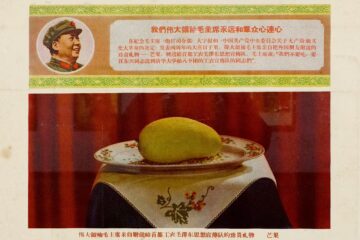 In August 1968, a visiting foreign minister from Pakistan, Mian Arshad Hussain, gave Mao a box of mangoes as a gift during a state visit. Presenting mangoes has a long tradition in Pakistan, but in China, the fruit was virtually unknown. Mao passed the box to workers occupying the Tsinghua campus in Beijing, who were attempting to control the Red Guards stationed there. The scholar of Chinese visual culture Alfreda Murck writes that the mangoes carried an implicit message: from now on, the workers, not the Red Guards, would be in charge of education and the transformation of China in Mao’s image.
According to Murck, even Mao could not have anticipated the consequences of his gift. Because the mangoes came from the supreme leader, they were transformed, in the eyes of the workers, from a simple fruit into an object endowed with attributes of the divine. William H. Hinton, the author of Fanshen, compiled eyewitness accounts of workers who reported staying up all night, touching the mangoes, and marveling at their new station as protégés of the Chairman. Using the momentum, the official party cadres concocted a propaganda campaign surrounding the mangoes, workers, and Mao, and in doing so, according to the political scientist Richard Baum, effectively signed “the death warrant of the Red Guards.”
more here.
Enjoying the content on 3QD? Help keep us going by donating now.