
Amber Dance in Quanta:
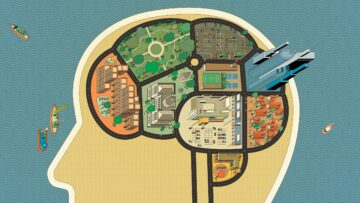 Researchers have been mapping the brain for more than a century. By tracing cellular patterns that are visible under a microscope, they’ve created colorful charts and models that delineate regions and have been able to associate them with functions. In recent years, they’ve added vastly greater detail: They can now go cell by cell and define each one by its internal genetic activity. But no matter how carefully they slice and how deeply they analyze, their maps of the brain seem incomplete, muddled, inconsistent. For example, some large brain regions have been linked to many different tasks; scientists suspect that they should be subdivided into smaller regions, each with its own job. So far, mapping these cellular neighborhoods from enormous genetic datasets has been both a challenge and a chore.
Recently, Tasic, a neuroscientist and genomicist at the Allen Institute for Brain Science, and her collaborators recruited artificial intelligence for the sorting and mapmaking effort.
More here.
Enjoying the content on 3QD? Help keep us going by donating now.