
Rachel Gerry at the LARB:
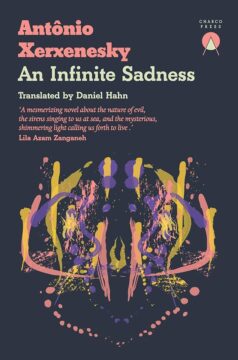 In the genre of sanatorium literature, An Infinite Sadness stands apart. It doesn’t have much of the fellow feeling that defines Thomas Mann’s classic The Magic Mountain (1924), in which Hans Castorp, bowled over by love and intellectual companionship, struggles to leave the Berghof hospital. In Christa Wolf’s August (2012), the protagonist reflects on the affecting compassion of a fellow resident in a TB clinic, while in Ken Kesey’s One Flew over the Cuckoo’s Nest (1962), the bonds among the patients form the basis of their resistance to institutional authority. Alphonse Daudet, while seeking relief from spinal pain in a thermal spa, wrote that “the patients, in all their weirdness and diversity, draw comfort from the demonstration that their respective illnesses all have something in common.” Stories set in sanatoriums tend to show their characters slowly settling into their new homes, the world slipping away, time taking on different proportions. Separated from the imperatives of productivity, the sanatorium is an imaginative space in which the future is null and progress uncertain. As sickness becomes the rule instead of the exception, the patient begins to exist authentically, in a reality defined by a community of fellow sufferers.
more here.
Enjoying the content on 3QD? Help keep us going by donating now.