
Beatrice Radden Keefe at the NYRB:
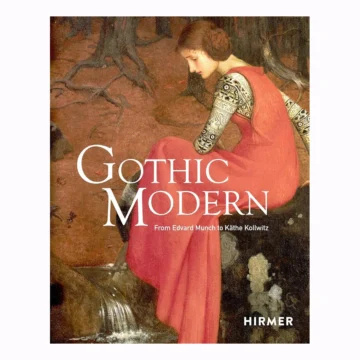 Another bout of Gothic fever in the early twentieth century revolved less around a style than around a restless Gothic energy, an overwrought Gothic sensibility. In 1921 the German art historian Hermann Schmitz remarked that calling something Gothic had become the highest form of praise: a dancer on Berlin’s Kurfürstendamm might be complimented for the Gothic line of her movements, an Expressionist painting for its Gothic feeling. Schmitz bemoaned this misappropriation of the “most glorious legacy of the pious and pure spirit of our forefathers.” Seen as German by Germans and as French by the French, the Gothic was revered by those yearning for a lost age of faith and unity as well as by avant-gardes in search of the new.
Over the past year, the exhibition “Gothic Modern” brought together medieval, Renaissance, and modern works to explore how European artists of different stripes engaged with the Gothic between 1875 and 1925. This is a Gothic that was never exactly defined and flexible enough to include works in a vaguely dark and frightful mode as well as those by the German Renaissance masters Lucas Cranach the Elder, Albrecht Dürer, and Hans Holbein the Younger. The traveling show presented medieval and Renaissance sculptures, woodcuts, engravings, and paintings alongside artworks by Käthe Kollwitz, Edvard Munch, Max Beckmann, and many others.
more here.
Enjoying the content on 3QD? Help keep us going by donating now.