
Peter Marshall at Literary Review:
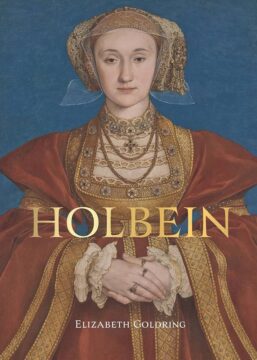 It’s an irony to savour: the man who invented the Tudors was a German. If Henry VIII, his wives and courtiers exercise a stronger hold on the public imagination than their Plantagenet precursors or Stuart successors, it is because we can all picture them so clearly. That, in turn, is due to an extraordinary sequence of portraits and drawings produced between the late 1520s and early 1540s by Hans Holbein of Augsburg (c 1497–1543), many of which have become instantly recognisable. This familiarity, as Elizabeth Goldring notes at the outset of her superb and ground-breaking biography, means it is harder to appreciate just how novel Holbein’s portraits appeared to the first people who saw them. They marvelled, even more than we do, at Holbein’s ability to make viewers feel that they have been ‘granted access to the sitter’s inner thoughts and feelings, that Holbein has distilled the essence of the sitter’s nature and temperament in visual form’.
That Holbein is remembered as a portraitist is partly a reflection of modern artistic priorities, biased towards painting. One of the merits of Goldring’s appraisal is the attention she pays to Holbein’s other cultural output: book illustrations, window schemes, sets for court festivities and various forms of metalwork – there are hundreds of surviving designs for jewellery and utensils.
more here.
Enjoying the content on 3QD? Help keep us going by donating now.