
Translated from Chinese by Eleanor Goodman, intro by Kaiser Kuo at Equator:
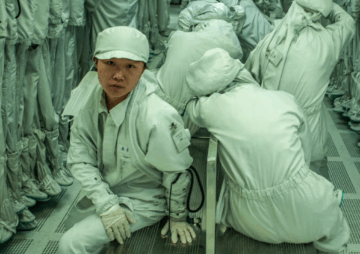 I first encountered Zheng Xiaoqiong’s writing in Iron Moon, a collection of Chinese worker poetry skilfully translated by Eleanor Goodman (2016). What struck me then about her poetry, and what remains true in this prose selection, is Zheng’s attentiveness to the texture of migrant-worker life. She restores dignity not through political theatrics, but through rigorous sensory detail: the clang of metal, the sting of dust, the smell of dirty socks, the fluorescent fatigue of factory nights, and cramped dormitories where shirtless men play cards and chainsmoke. She records the world as it is felt by the people who move through it. In doing so, she opens a space in which they can be seen as individuals – complicated, vulnerable and never reduced to symbols.
These subjects are caught in a trap that has structured millions of lives over the past four decades. On one side lies the village: impoverished, agrarian and socially stifling. On the other lies the city: dazzling and modern, but also cold, precarious and brutally indifferent. Zheng’s writing captures the psychic tension of that in-between space – the feeling of being suspended between two worlds, belonging fully to neither.
More here.
Enjoying the content on 3QD? Help keep us going by donating now.