
Yuri Slezkine at Equator:
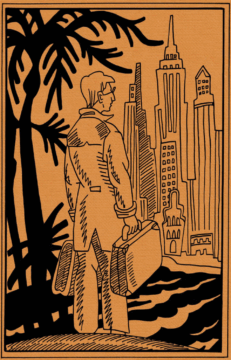 These books were born in Western Europe and North America at the confluence of imperial expansion, mass literacy and the rise of the translation industry, popular periodicals and book serialisation. They owed their existence to the arrival of boys as a separate – and increasingly profitable – segment of the book-reading public. Robert Louis Stevenson described Treasure Island as “a story for boys”; Haggard, his imitator and competitor, offered King Solomon’s Mines “to boys and to those who are boys at heart”.
In Russia, these books had become required reading by the turn of the twentieth century. My grandfather, born in 1885, read them, and so did my father, my father’s war-veteran friends and most of my classmates, no matter what their fathers and grandfathers did for a living.
In Speak, Memory (1951), Vladimir Nabokov remembers “savouring” The Headless Horseman as a child in St. Petersburg, the book’s watery-grey frontispiece turning “completely bleached” in the blaze of his imagination.
More here. [Free registration required.]
Enjoying the content on 3QD? Help keep us going by donating now.