
Mark Iosifescu at n+1:
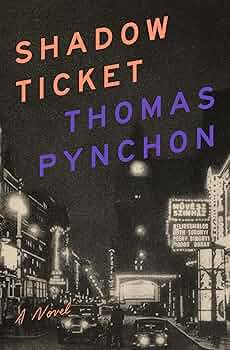 For my money, though, the book is most interesting for those aforementioned moments of tonal whiplash, scenes wherein big shifts of register or reference point are undertaken with remarkably little in the way of narrative scaffolding. Shadow Ticket, in addition to being extremely fun and almost indecently readable, is also replete with edges left conspicuously unsanded, a combination that might go some way toward frustrating or at least reframing the prevailing misconception of Pynchon as a willfully difficult, high-maximalist, paranoid outsider-recluse. It’s a reputation that has obscured a clear view of the author’s work in one form or another for the entirety of a long career, alternately burnishing the image of an enigmatic hipster sage or offering up a strawman for the excesses and overreaches of the showoff tradition he supposedly epitomizes. It’s made the name “Thomas Pynchon” into a byword for inaccessible genius, the Trystero horn into an enduring stall-wall Sharpie tag, and Gravity’s Rainbow into a punchline on The O.C., but, meanwhile, the, you know, actual books? Those have drifted considerably from these mythic calcifications, gradually resolving into a scope and style more characterized by shaggy plotting, political generosity, and out-and-out sweetness than anything resembling the lit-bro hazing rituals that some contemporary readers have been conditioned to expect.
more here.
Enjoying the content on 3QD? Help keep us going by donating now.