
Robert M. Ehrenreich and Alexandra M. Lord at JSTOR Daily:
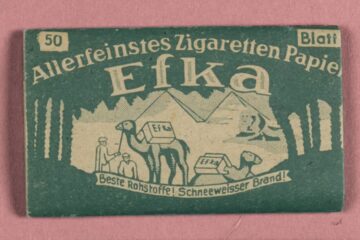 Open one of the drawers in a collections cabinet at the United States Holocaust Memorial Museum, and you’ll find a small booklet of Efka cigarette papers. The papers are part of a broader story the museum tells about Nazism, corporate collaboration, and wartime propaganda.
But walk just a half mile across the National Mall to the Smithsonian Institution’s National Museum of American History, and you’ll find a very different story about this particular artifact. At the Smithsonian, Efka rolling papers are part of a collection of objects associated with the use of marijuana and the counterculture movement of the 1960s and 1970s in the United States.
How did these objects come to tell two such diametrically opposed stories?
After World War II, German companies aggressively worked to whitewash their Nazi past and rebrand themselves. By the 1960s and 1970s, as the youth market exploded and memories of war faded, advertising campaigns for German companies such as Volkswagen promoted their products as symbols of the counterculture. Across America, young men and women strapped on their Birkenstocks, hopped into their VW Beetles, and rolled a joint with Efka papers—all before heading off to protest what they often described as “American fascism.”
more here.
Enjoying the content on 3QD? Help keep us going by donating now.