
Göksu Kunak at Artforum:
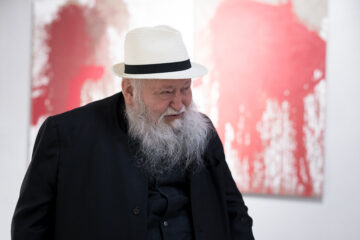 What transpired next was a kind of Dionysian rural festival where performers hung carcasses and living bodies, animal and human, losing themselves in pouring, smearing, splashing—actions Nitsch had developed for years. Mythical figures became crucial scaffolds alongside Christian elements like garments, foot-washing, a grail, and the cross. Odysseus and Parsifal recurred as structural motifs that framed the choreography, scent, sound, and sacrificial acts: Odysseus as an emblem of the wandering heroic subject who must cross the threshold into chaos, the way the performers descend into a forest of flesh. Performers took their time carrying wooden structures for which human and animal bodies were used as embellishment. Huge white cloths were stretched, spattered with bright-red animal blood next to lilies, slaughtered flesh, and the symbolically crucified, tied-up human body.
In Nitsch’s work, disembodiment becomes a way to get back into the body. But there’s also something digital in his immersive choreography whereby everything, even nature, seems programmed. The sun set. Flowers smelled. Birds chirped. There was an ongoing pitch, a sound that lingered in the space, even when the actions stopped. It felt very weird to drink the Nitsch-branded Wine and talk.
more here.
Enjoying the content on 3QD? Help keep us going by donating now.