
Conor Feehly in Quanta:
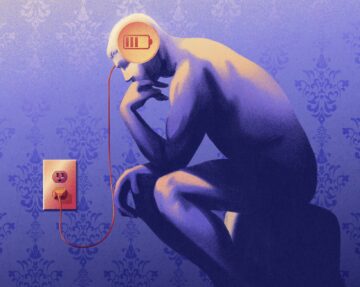 Sharna Jamadar(opens a new tab), a neuroscientist at Monash University in Australia, and her colleagues reviewed research from her lab and others around the world to estimate the metabolic cost of cognition(opens a new tab) — that is, how much energy it takes to power the human brain. Surprisingly, they concluded that effortful, goal-directed tasks use only 5% more energy than restful brain activity. In other words, we use our brain just a small fraction more when engaging in focused cognition than when the engine is idling.
It often feels as though we allocate our mental energy through strenuous attention and focus. But the new research builds on a growing understanding that the majority of the brain’s function goes to maintenance. While many neuroscientists have historically focused on active, outward cognition, such as attention, problem-solving, working memory and decision-making, it’s becoming clear that beneath the surface, our background processing is a hidden hive of activity.
More here.
Enjoying the content on 3QD? Help keep us going by donating now.