
Amelia Soth at n+1:
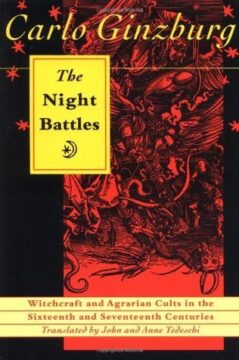 It was like falling in love: passionate, immediate, and naive. In the library at the Scuola Normale in Pisa, Carlo Ginzburg, age 20, made three decisions in the same instant: to become a historian, to study witchcraft trials, and to try and rescue (to use his term) the voices of the defendants. Ginzburg knew so little about the witch trials that his next act was to go and look up “witchcraft” in the encyclopedia. He had no idea the difficulties his project would pose, or what it would take to recover the beliefs and ideals of the accused from an archive built by their accusers.
There was not much to go on. Here and there in the archives, the words of the accused would leap out like a flash of lightning, but Ginzburg could discover these isolated clues only with persistence and luck, and connecting them to the broader historical picture required great feats of deduction and imagination. It called for another way of thinking about evidence, a kind of zooming in and out between the paradigm and the anomaly, like toggling the dials of microscope.
more here.
Enjoying the content on 3QD? Help keep us going by donating now.