
by Tammy Lai-Ming Ho
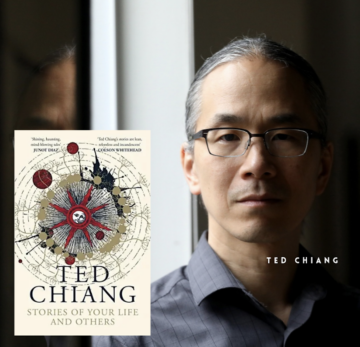
In Ted Chiang’s “Hell Is the Absence of God,” the term “restoration” appears multiple times in relation to the legs of one of the characters, Janice Reilly. The story, first published in 2001 and winner of the Hugo and Nebula Awards, was collected in Stories of Your Life and Others (2002). It unfolds in a world governed by theological literalism, a fictive order wherein, as Chiang writes of Hell, “the truth of this was plain for anyone to see”: the existence of God is not a matter of belief but empirical record, angels manifest as public events, and Heaven and Hell are real.
Janice was born without legs, the result of a visitation by the angel Bardiel when her mother was eight months pregnant. She has, over the course of her life, constructed from that fact a complete identity and vocation. “Without pride or defiance,” Chiang writes, “she saw it as her responsibility to show others that her condition did not indicate weakness, but rather strength.” She becomes a writer, a public speaker, the founder of a non-profit organisation, and an influential figure within disabled communities.
All is well until the unexpected visitation of another angel, Rashiel, which precipitates a crisis. Chiang has written that the story only came together once he imagined angels as terrifyingly powerful forces whose visitations resemble natural disasters,[1] and Rashiel arrives as an earthquake: Janice is letting herself into her house “when the tremors began.” His name echoes Ra’ashiel, the angel set over the earthquake in the Hebrew Book of Enoch.[2] Repair, in other words, comes to Janice with the force and indifference of a natural disaster. We are told that Janice catches “a glimpse of silver in the sky” before losing consciousness during Rashiel’s appearance. When she wakes up, she encounters “the biggest surprise of her life: the sight of her two new legs, long, muscular, and fully functional.” She stands for the first time and is “taller than she expected,” the unfamiliar altitude inducing a vertiginous disorientation. The change is total and instantaneous—and for Janice, a catastrophe. The story’s other words for it are blessing, gift and miracle; the word Chiang returns to, again and again, is “restoration.”
❧
Janice’s initial response fuses gratitude with guilt. At a support group, she meets two cancer patients who also witnessed Rashiel’s visitation, anticipated a cure, and received nothing. She cannot account for why she—who never possessed legs—has received their “restoration,” while the cancer patients’ conditions persist unchanged. Her family interprets the event as a reward—divine recognition for “excelling at the task God had set for her.” Yet this interpretation immediately generates a further question: does excelling at the task mandate its cessation? Her next speaking engagement, before an audience of people recently confined to wheelchairs, sharpens the dilemma: “How could she inspire others who were touched by God to see their condition as a badge of strength, when she no longer shared their condition?” She has lost, the narrative tells us, “her greatest source of credibility.”
❧
The story presents a clear example of an unwanted reparative act imposed without consent. Chiang specifies Janice’s prior relationship to her own body. Before the “restoration,” she had never wished for legs. She had “never bothered with prosthetics” and had never considered the possibility that God might restore her legs. Whenever asked publicly, she consistently replied that she felt no sense of incompleteness, and would have declined any available surgical intervention.
❧
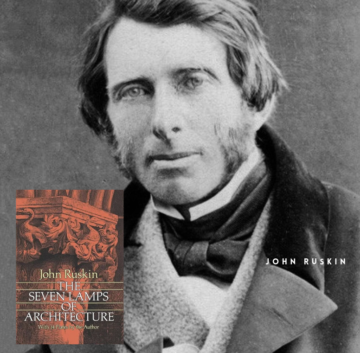
The word “restoration” carries within it a set of presuppositions: a correct, original state from which deviation has occurred. We restore a damaged painting to what it once was, reset a fractured bone into alignment. Both cases assume a preexisting wholeness that remains, in principle, recoverable. That assumption underwrites the intelligibility of reparation as a concept, yet those who have thought hardest about restoration have doubted it. Ruskin, writing in 1849, called restoration “the most total destruction which a building can suffer,” a destruction “accompanied with false description of the thing destroyed.”[3] Even Viollet-le-Duc, the architect who restored Notre-Dame, defined the task as reinstating a building “in a condition of completeness which could never have existed at any given time.”[4]

Eli Clare, a writer and activist disabled from birth, makes the same point about cure, which the dictionary defines as the “restoration of health”: “for some of us… restoration still doesn’t make sense, because an original non-disabled body doesn’t exist.”[5] Chiang’s story dramatises what happens when reparation meets someone who recognised no such wholeness to return to—someone who had constructed a total life, and for whom legs were simply not part of it. The angelic visitation delivers not recovery but installation: Janice awakens into a body decided upon her.
It is at this juncture that violence begins. Janice’s public role had been tied to her condition—she spoke from within the specific experience of not having legs. The “restoration” retroactively reclassifies her entire life as evidence of deficiency, reframing her vocation as the compensatory strategy of a damaged subject, now mended.
❧

Janice fails to perform the gratitude the restoration demands of her. She “could hardly promise them”—the newly paralyzed members of her audience—“that one day their marks would be erased.” Her public hesitation is read by those around her as ingratitude, a moral failing. Neil Fisk, the story’s protagonist, himself born with a malformed leg, sees it this way: “She had received what anyone else would have considered a fantastic blessing, and she was complaining about it.”
Marcel Mauss identified three obligations in gift exchange: to give, to receive, and to reciprocate.[6] To decline a gift was not merely impolite but a refusal: a rejection of the social bond the gift was designed to produce. To accept without repaying, meanwhile, was to be diminished: “the unreciprocated gift still makes the person who has accepted it inferior.”[7] Tellingly, Mauss wrote The Gift amid the quarrel over German war reparations after 1918, which he hoped France would cancel or defer.[8] Janice cannot refuse what has been delivered to her body. She cannot reciprocate, as no circuit of exchange returns to an angelic giver. The obligation to feel gratitude, to become someone for whom this event constitutes good news, is an obligation she never agreed to incur.
Derrida, reading Mauss, observed that the German Gift—cognate with the English “gift”—also means “poison.”[9] In a footnote he links this to the Greek pharmakon, which means both remedy and poison: cure and harm in a single word. A true gift, he argues, would require “no reciprocity, return, exchange, countergift, or debt”; once it creates a debt, it has ceased to be a gift. The gift that cannot be refused and cannot be returned does not liberate the recipient. It binds them. The giver occupies the position of benefactor; the receiver that of debtor. For Janice, this asymmetry permits no resolution. She cannot articulate her grievance without appearing to complain about a miracle. This is the particular cruelty of imposed reparation: it forecloses the possibility of refusal by rendering refusal itself unjustifiable.
What Chiang illuminates is that unwanted reparation does not simply alter the present. It rewrites the past—installing, retroactively, a narrative of prior suffering onto someone who did not experience her history in those terms. Janice receives a new biography: authored without her participation, delivered while she was unconscious, and impossible to return.
❧
And yet she tries. Janice concludes that her legs may have been “a miracle meant for someone else” and travels to a holy site to offer them back—to return the gift. She privately considers her pilgrimage, with characteristic selflessness, “a request on behalf of those who were in need.” What she receives instead is another unsolicited visitation: struck by Heaven’s light as an angel departs, she is left eyeless. The irony compounds: her attempt to refuse one imposition results in a still more total one. She continues to speak, now, “like the other eyeless,” of “the unbearable beauty of God’s creation.” She does so with “complete conviction,” but in Chiang’s world the light compels love of God in those it strikes, so even her acceptance has been installed. But her audience thins. Being without legs had given her testimony its rare authority, and the particularity that organised her former vocation is gone.
Unwanted reparation, it turns out, in Chiang’s story, cannot be refused. Chiang closes off the possibility of resistance: each act of refusal generates a further imposition for Janice. This is deliberate. In his notes on the story, Chiang writes that what dissatisfied him about the Book of Job is that “in the end, God rewards Job.” The Lord “restored the fortunes of Job” and doubled them, and so, for Chiang, the book “lacks the courage of its convictions.”[10] Chiang withholds that consoling ending; with Janice he goes further, making restoration itself the start of her trouble. The story offers no redemption for the person who did not ask to be repaired.
This is, of course, just a story. In the real world, no angel would ever descend uninvited to correct what it has decided is deficiency. And yet Chiang’s parable speaks to something that does exist: the structure of reparation imposed without the participation of those it is meant to benefit. When Japan’s Asian Women’s Fund (1995–2007) offered survivors of wartime sexual slavery “atonement money” raised from private donations, most Korean survivors refused it, demanding direct compensation from the Japanese government. In 2015, Tokyo and Seoul declared the issue resolved “finally and irreversibly.” The survivor Lee Yong-soo answered: “We don’t want money. Those who commit crimes must take official, legal responsibility.” Two years later, South Korea’s president, Moon Jae-in, called the deal a “political agreement that excludes victims and the public.”[11]
Reparative gestures—however well-intentioned—can carry within them the same presuppositions as Rashiel’s visitation: that there is an original wholeness to recover, that the subject of repair is primarily defined by what they lack, and that the restorer’s judgement of what counts as restoration should go unquestioned. Melanie Klein placed reparation at the heart of psychic and moral life, but Kleinian psychoanalysis also names its counterfeit: “manic reparation,” which mends the damaged object while denying its separate existence and keeping it under the repairer’s control.[12] The story invites us to ask what it would mean to philosophise seriously about unwanted reparation—when reparation is imposed without negotiation and consent.

***
The idea for this piece grew out of my time as an Invited Senior Research Fellow at the Käte Hamburger Centre for Cultural Practices of Reparation (CURE), Saarland University, Saarbrücken, in 2024. My project there, “I Have More Memories Than If I Were a Thousand Years Old: Hong Kong in the Age of Reparation,” examined reparation through cultural memory, media and poetry.
***
[1] Ted Chiang, “Story Notes,” in Stories of Your Life and Others.
[2] 3 Enoch 14:4, in Hugo Odeberg, ed. and trans., 3 Enoch or the Hebrew Book of Enoch (Cambridge: Cambridge University Press, 1928). The name derives from Hebrew ra’ash, “earthquake.”
[3] John Ruskin, The Seven Lamps of Architecture (London: Smith, Elder, 1849), “The Lamp of Memory,” §18.
[4] Eugène-Emmanuel Viollet-le-Duc, On Restoration (London: Sampson Low, Marston, Low, and Searle, 1875), translating the entry “Restauration” in his Dictionnaire raisonné de l’architecture française du XIe au XVIe siècle, vol. 8 (1866).
[5] Eli Clare, Brilliant Imperfection: Grappling with Cure (Durham, NC: Duke University Press, 2017). The passage is also quoted in Carolyn Ogburn, “The Complicated and Contradictory Mosaic of Cure: An Interview with Eli Clare,” Ploughshares blog, 1 April 2017.
[6] Marcel Mauss, The Gift, trans. W. D. Halls (London: Routledge, 2002).
[7] Mauss, The Gift, 83.
[8] Grégoire Mallard, Gift Exchange: The Transnational History of a Political Idea (Cambridge: Cambridge University Press, 2019).
[9] Jacques Derrida, Given Time: I. Counterfeit Money, trans. Peggy Kamuf (Chicago: University of Chicago Press, 1992), 12–13. Mauss discussed the double meaning in “Gift, gift” (1924); Derrida cites this note and connects it to the pharmakon of “Plato’s Pharmacy” on p. 37, n. 1.
[10] Chiang, “Story Notes”; Job 42:10 (NRSV).
[11] Kim Se-jeong, “Victims Unsatisfied with Agreement,” Korea Times, 28 December 2015; “South Korea: 2015 ‘Comfort Women’ Deal Was Flawed,” Reuters, in Christian Science Monitor, 28 December 2017.
[12] Melanie Klein, “Love, Guilt and Reparation,” in Melanie Klein and Joan Riviere, Love, Hate and Reparation (London: Hogarth Press, 1937); Hanna Segal, Introduction to the Work of Melanie Klein (London: Heinemann, 1964), 83–88.