
Shiladitya Banerjee at The Conversation:
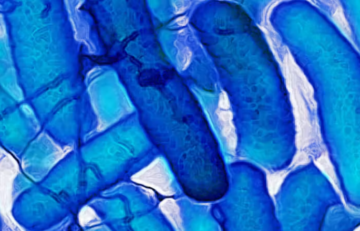 Learning is often thought to require a brain. But learning is a broad concept that does not necessarily depend on neurons.
If an organism uses information from past experiences to shape its future decisions, it is also learning.
Research from my lab, published in the journal PRX Life, shows that even a single bacterium can learn from experience, store memories of the past and use those memories to prepare for the future.
Bacteria live in environments that change constantly and on many different timescales. In the human gut, for example, nutrient levels go up and down, temperatures shift and antibiotic threats come and go.
To survive, a bacterium has to respond quickly to what is happening right now while still preserving useful information about what it recently experienced. Adapting too quickly leaves the bacterium vulnerable to changing conditions, while forgetting too readily makes it unable to anticipate a recurring threat.
How does a bacterium manage this balancing act?
More here.
Enjoying the content on 3QD? Help keep us going by donating now.