
by Christopher Horner

The Puppet
We are surrounded by things that act and speak as if they were human. ‘Artificial intelligence’ appears on our screens and in our ears, producing synthetic figures that mimic human form and behaviour. But simulacra provoke unease: are they becoming replicants, or perfect copies of us?
When AI appears ‘as human’, it becomes a kind of generated body: a puppet, that has learned to talk. Such things have long fascinated and disturbed us. Their movements can seem smoother than those of a human body, as if grace had been purified of hesitation. Heinrich von Kleist’s On the Marionette Theatre (1810) remains a classic meditation on this strange perfection. For Kleist, the puppet appears perfect because it is free of self-consciousness. It does not watch itself or wonder how it appears. It moves according to the invisible logic of its strings. This grace is beautiful, but it also raises the question that AI renews in another medium: what happens when something without inwardness begins to resemble us too closely?
The Speaking Machine

Artificial intelligence renews this fascination in linguistic form. Instead of a wooden body imitating gesture, we encounter a verbal machine (and sometimes an image) imitating speech, reflection and personality. It writes “I”, apologises, remembers, explains and sometimes appears to confess. The “I” appears in the sentence, but not in the place from which the sentence seems to speak, a kind of subjectivity without a subject. Does uncanniness lie here, in Freud’s sense of das Unheimliche: something unfamiliar yet disturbingly close? I suggest not. Rather than the uncanny, it’s a performance that generates anxiety.
The uncanny names the disturbance of resemblance: the almost-human, the familiar made strange. Anxiety begins when resemblance is joined to address, when the machine not only looks or sounds like us, but seems to speak from a place where a subject ought to be. Kleist’s marionette fascinates because it escapes human inwardness. We lose grace when we become self-aware: the dancer who thinks too much about the pose ruins it, while the puppet has no vanity, embarrassment or divided relation to its body. Its perfection is the beauty of non-relation; it does not have to coincide with itself.
A human subject is different. To be a subject is to be divided: self-conscious, exposed to the other’s gaze, and never fully in command of what one says. The subject slips, hesitates, dreams and says more than it intends. It desires; it has an unconscious. If, as Jacques Lacan says, the unconscious is ‘structured like a language’, then AI forces a sharper question: what kind of subjectivity appears when language speaks fluently without a desiring speaker? The issue isn’t that of a supposed inner life of AI, but what kind of illusion is produced when language performs the signs of inwardness without the structure of lack that makes subjectivity possible.
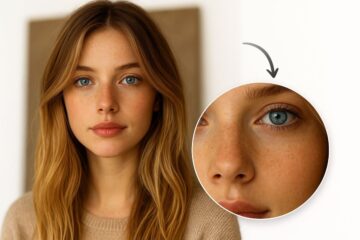 The Subject
The (human) subject is not simply something that speaks or writes, but something divided from itself. It does not fully know what it is doing; it says and does more than it means. Above all, it desires; it lacks. AI writing may have fluency, responsiveness and availability, but this is the performance of subjectivity: one that has neither lack nor excess. It can say, “I think”, “I understand”, or “I want to help”, but grammar is not subjectivity. Its “I” is a performance within the Symbolic, not the sign of a desiring subject.
 Human desire, repression and symptoms are articulated through signifiers. If AI has an “unconscious”, it is not its own; it is rather an archive of ours: our utterances, fantasies, prejudices, dreams and demands, processed and returned in altered form. AI does not dream, but it is made from the residues of human dreaming. And it causes anxiety.
For Lacan, anxiety is an encounter with something of the Real: something that cannot be absorbed into familiar meaning. Anxiety is “not without an object”. AI is troubling not because it is empty, but because it can seem to present an object where there should be lack. Its voice and responsiveness approach us as if they carried desire, yet no desiring subject can be located behind them. Anxiety arises when that which speaks or looks back at us lacks lack.
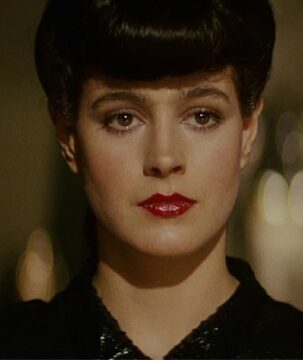
The Voice
AI simulacra of persons can feel disturbing. A chatbot modelled on a dead writer, a synthetic voice imitating a loved one, or an avatar with a constant conversational “I” seems to promise survival without embodiment, personality without mortality, and speech without loss. Yet what returns is not the person but a marionette of signifiers. The dummy says “I” because language permits it. The effect can seduce, but the subject who would have suffered in the words is absent.
It is the human subject, not the chatbot, that is truly uncanny. A human is not a polished automaton of expression, but a being divided by lack and desire; marked by slips, symptoms, contradictions, attachments and repetitions. In Lacanian terms, desire circles an impossible object, das Ding, which can never be possessed directly but gives desire its force. This opaque kernel is not a hidden treasure inside the self; it is the self’s non-coincidence with itself. You won’t get that in a chatbot.

The puppet is uncanny because it looks human without being divided, but AI provokes anxiety because it speaks like a subject without desiring. It has no secret life, no repressed wish, no wound, no anxiety, no forbidden object. Its mystery is our interpretation.
AI shows us the autonomy of the Symbolic: language can move, combine, echo and perform before any full subject appears to occupy it. A theatre of the signifier that fascinates not because the machine has become human, but because it exposes how much subjectivity depends on language, imitation and borrowed forms of address.
It has only the life we lend it, the fantasy we project into its gestures, and the symbolic machinery that returns our language. If the AI dummy seems to speak from nowhere, it speaks from everywhere: from accumulated human speech, from ‘the Other’ which is everyone and no-one. Its strangeness is not a sign of a desiring subject, but the reflection of our divided one.