
Brooke Allen at the Hudson Review:
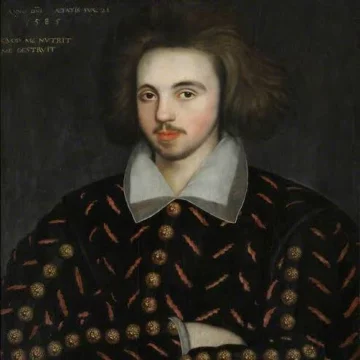 English life in the later sixteenth century was of a bleakness and violence that is hard to credit now. Middle-aged people had lived through a whiplash-inducing series of political and religious about-faces, from Henry VIII’s break with the Catholic church and dissolution of the monasteries, to his son Edward’s stricter Protestant regime, to “Bloody” Mary’s return of the country to the Catholic fold, to the nine-day reign and then the execution of Lady Jane Grey, to Elizabeth’s accession and attempts to establish a sustainable middle ground. Each change of regime, it goes without saying, was accompanied by “dark waves of conspiracies, suspicions, arrests, and executions, all on top of the ordinary punishments meted out in a brutally punitive society” and brought about “unbearable stress and danger” in the population. Culturally England was a backwater, on the very fringe of European society. The universities were hidebound. The most popular entertainments in London were animal fights. And then, in the years after 1580, it all changed: “a constellation of brilliant poets, the greatest dramatists in the English language, extraordinary advances in navigation, astronomy, and mathematics, the first attempts to establish English colonies in the New World, and in intellectual life, the speculative and experimental daring that led Francis Bacon to declare that ‘knowledge itself is power.’”
more here.
Enjoying the content on 3QD? Help keep us going by donating now.