
Anton Leicht at Threading the Needle:
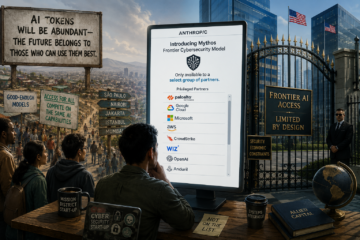 There’s a common mantra in the outskirts of AI policy thought: driven by market pressures and overheated capital markets, AI tokens will soon be abundant—and the future belongs to those who can use them best. The further you get away from San Francisco, the louder this mantra grows. It reaches a fever pitch in the peripheries, the many middle powers of the world still caught up in a plan to navigate the AI revolution on the basis of merely good-enough models. That view requires important AI capabilities to be widely accessible: defenders have access to models before attackers do, firms in all domains compete based on access to the same AI capabilities.
Recent events have thrown that view for a loop, and it now seems clear that access to frontier AI will soon be limited by economic and security constraints. In early April, Anthropic announced it had developed Mythos, a leading cybersecurity model, and that it would only make its considerable ability to patch extant vulnerabilities available to a select few companies. Cybersecurity start-ups in the Mission District, systems integrators on the Eastern Seaboard and allied capitals on the Atlantic and Pacific all had a similar experience: scrolling down the page to see the list of privileged partners only to find a limited selection of U.S.-based corporations.
More here.
Enjoying the content on 3QD? Help keep us going by donating now.