
Callie Hitchcock at the LARB:
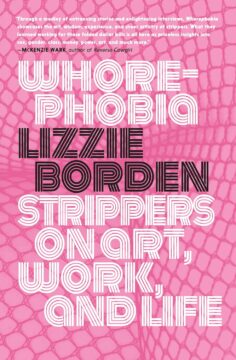 “Stripping didn’t used to be so touchy-feely, but in the past ten years, it’s become a full-contact sport,” writes Lily Burana in her 2001 memoir Strip City: A Stripper’s Farewell Journey Across America. With origins in burlesque, strippers danced on a stage and were paid a wage. But alongside the neoliberalization and atomization of the United States at the turn of the century, stripping culture shifted too.
In “sixties, seventies, eighties, nineties stripping, there was a huge emphasis on performing onstage. And a lot of stripping was sort of akin to burlesque performing,” Luna Sofía Miranda—a New York stripper, actress, and producer—said on a video call. Miranda, who played Lulu in the 2024 film Anora, told me that clubs in the late 1990s increasingly started prioritizing lap dances and making VIP rooms: “I feel like that’s when this shift happened, where stripping became not just an entertainment and performing job but very much like a service, a customer service job and a sales job.” She explains how now, in New York, “no one cares if you can pole dance or not.” “In fact,” she adds, “I think if you show up to an audition for Sapphire or Rick’s [Cabaret] and you’re pole dancing, they might not hire you because they don’t want you to dance. They want you to sell rooms.”
more here.
Enjoying the content on 3QD? Help keep us going by donating now.