
by Priya Malhotra
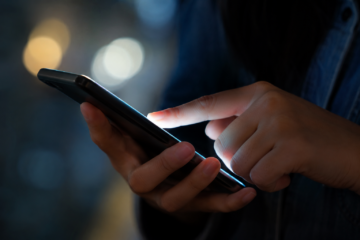 Before I launch into any critique of the phone, I should confess that I am not immune to its seductive qualities. I am not writing from a mountain, purified by silence, looking down at the scrolling masses. Like almost everyone else, I spend too much time on my phone. I reach for it when I am bored, when I am anxious, when I am tired, when I have two minutes between tasks, and the list goes on and on. I have checked it without wanting anything from it. I have opened one app, closed it, opened another, returned to the first, and emerged several minutes later with nothing gained but a vague sense of …something so amorphous that I can’t even begin to find the words to describe it.
So this is not a sermon. It is a confession disguised as cultural observation.
The phone is useful and has made life easier in so many ways. It lets us find our way home, call for help, send money, photograph our children, listen to music, read books, preserve friendships across continents, translate menus, summon taxis, record evidence, track medication, learn languages, and tell someone we love them from a hospital corridor or an airport gate. For many people, especially those who are isolated, disabled, elderly, far from family, or economically dependent on digital work, the phone is not a toy. It is essential.
And yet, precisely because the phone is so useful, it has become almost impossible to see it clearly. It has slipped past the category of object and become a world or many worlds. It is not something we merely use–it is something we inhabit. It is alarm clock, mirror, wallet, library, television, therapist, confessional, marketplace, map, camera, newspaper, babysitter, diary, and escape hatch. It is the first thing many of us touch in the morning and the last blue glow we see at night. It has become, in the most literal sense, an extension of the hand; and in some stranger sense, an extension of the mind.
But what kind of extension? A limb, perhaps. Or a leash.
There was a time—not necessarily a better time, but a different one—when empty moments had to remain empty. Waiting in a doctor’s office, riding in a car, standing in a queue, sitting alone in a café: these were small chambers of unclaimed consciousness. We might have been bored, irritated, restless, observant. We might have noticed the pattern on the floor, overheard a strange sentence, remembered something from childhood, worried about our lives, solved nothing, dreamed a little. Such moments were not always profound. Often they were merely dull. But they belonged to us.
Now those intervals are immediately filled. The hand goes to the phone with the automatic tenderness of a child reaching for a pacifier. The analogy is imperfect, but revealing. A pacifier does not feed the child; it soothes the child. It quietens the mouth. It interrupts distress. It offers the sensation of comfort. The phone does something similar for adults. It does not always answer our loneliness, but it anesthetizes it. It does not always relieve anxiety, but it gives anxiety something to do. It does not always connect us, but it keeps us from feeling entirely alone.
Look around any waiting room, airport lounge, restaurant table, school pickup line, or family gathering, and the sight has become so ordinary that it barely registers: people sitting together in silence, each looking down, often wearing headphones, taking in a private weather system of noise. News, reels, messages, memes, outrage, recipes, war, puppies, strangers crying on camera, strangers explaining their healing journeys, strangers dancing badly, strangers teaching us how to live. We are silent consumers of more information than we can digest or remember.
The irony is almost too neat: the moments in which we might once have been prone to introspection are now often spent consuming other people’s journeys of introspection. We do not sit with our own grief; we watch a woman in excellent lighting describe how she processed hers. We do not ask ourselves why we are restless. Instead, we watch a man explain the nervous system. We do not enter our own silence; we scroll through quotes about solitude. We have outsourced even inwardness.
This is not hypocrisy. It is hunger. The phone offers what human beings have always wanted: story, novelty, reassurance, recognition, distraction, beauty, gossip, instruction, belonging. The problem is not that these desires are shallow. They are ancient. What is new is the delivery system: endless, portable, personalized, frictionless, and designed to learn us faster than we learn ourselves.
Unlike a person, the phone requires no negotiation. It never says, “I’m tired.” It never asks us to listen in return. It never looks wounded because we misunderstood it. It never demands the difficult skills that actual relationships require: patience, reciprocity, apology, boredom, compromise, the ability to sit through another person’s silence without trying to fix it. The phone is a one-way street disguised as intimacy. We command, and it delivers. We swipe, and it obeys.
Or so it seems.
Because truly, who is the master and who is the servant? The phone waits, yes, but we are the ones who return to it. We are the ones who feel the phantom buzz, the small panic when the battery turns red, the disorientation when it is left behind. People have even given a name to the fear of being without a mobile phone: nomophobia, a term increasingly studied in relation to anxiety and problematic smartphone use, though not a formal psychiatric diagnosis. Even those of us who are not “addicted” in any formal sense can recognize the dependency. The phone has become so embedded in ordinary life that absence doesn’t feel quite like inconvenience but incompletion.
It is almost like a secret third presence in relationships. Couples sit side by side, each elsewhere. Friends meet for coffee and place their phones faceup on the table like small gods who may need appeasing. Parents tell children to look up while glancing down. Wives complain that husbands spend more time with their phones than with them and husbands often make the same complaint. The affair is not sexual, but it is intimate. The phone receives our attention in its most unguarded form: compulsive, repetitive, almost tender.
Thanks to the phone, even our despair has acquired a gesture. Doomscrolling—the act of spending excessive time scrolling through distressing online content—has become part of the vocabulary of modern life. The term is comic, but the experience is not. One enters looking for information and leaves with a nervous system full of ash. War, scandal, collapse, cruelty, disaster: each item arrives flattened into the same vertical motion. Scroll. Scroll. Scroll. The finger becomes a little engine of dread.
But not all scrolling is doomscrolling. Some of it is more insidious because it is mildly pleasant. We scroll through mindless, faintly titillating reels, through outfits, faces, jokes, confessions, transformations, before-and-afters, small domestic dramas, strangers’ breakfasts, strangers’ babies, strangers’ bodies, strangers’ grief. None of it is exactly harmful in isolation. Much of it is amusing. Some of it is beautiful. But the cumulative effect is fragmentation. Attention becomes pixelated. The mind learns to hop, nibble, flinch, compare, abandon. We begin one thought and are pulled into another. We open a message and forget why we picked up the phone. We intend to rest and emerge stimulated, not restored.
The phone has not merely shortened attention. It has changed the texture of aloneness.
To be alone now often means to be alone with a device that contains everyone else. The old solitude, with its awkward spaciousness, has been replaced by populated solitude: a crowd in the palm. We can be physically alone and socially saturated. We can avoid our own minds while consuming the intimate disclosures of others. We can feel connected and untouched at the same time.
What would happen if we did not reach for our phones so quickly? If we allowed the elevator ride to remain an elevator ride, the queue to remain a queue, the sleepless hour to remain an encounter with the sleepless self? I am not sure the answer is immediately pleasant. That may be why we avoid it. Beneath the phone lies the thing it protects us from: worry, longing, regret, boredom, desire, the unedited weather of being alive.
The phone is a balm for loneliness, but it can also postpone the work loneliness asks of us. It can soothe anxiety while preventing us from understanding it. It can offer connection while sparing us the risk of conversation. It can give us the illusion of being informed while leaving us less able to think. It contains everything finite and infinite—every song, map, market, message, spectacle, outrage, memory—and yet somehow, after hours inside it, we may feel curiously undernourished.
The answer cannot be simple renunciation. Most of us will not throw our phones into the sea, nor should we. The device is too woven into work, safety, friendship, family, citizenship. The point is not to become pure. The point is to become conscious.
Perhaps the first act of resistance is embarrassingly small: to notice its reach. The hand moving before the mind has consented. The little reflex at the first hint of discomfort. The way we flee a pause as though it were danger. Not to shame ourselves, but to ask: what am I asking the phone to do for me right now? Entertain me? Rescue me? Sedate me? Reassure me that I exist?
The second act may be to return, briefly and imperfectly, to the unfilled moment. To walk without headphones once in a while. To stand in a line and look around. To let a child be bored without instantly offering a screen. To sit with the first sting of loneliness before medicating it with content. To remember that an unoccupied mind is not an empty mind. It is a room waiting for someone to enter.
I say this knowing I will fail at it. I will finish writing this and probably check my phone. I will justify it as necessary. Sometimes it will be. Often it will not. But perhaps honesty is a better beginning than purity.
The phone is the object that gives us what we ask for, until we forget what we meant to ask. It speaks in our language, feeds our appetites, carries our memories, fills our silences. Like all powerful comforts, it does not force itself upon us. It waits, glowing, patient, infinitely accommodating.
The question is whether we can learn, sometimes, to leave it waiting. Whether we can bear the small withdrawal of silence. Whether we can let the voices inside our heads and throats return as evidence that we are still here, still thinking, still capable of being alone with a self that no device can deliver back to us once we have misplaced it.
Enjoying the content on 3QD? Help keep us going by donating now.