
Jeroen van Baar at An Educated Guess:
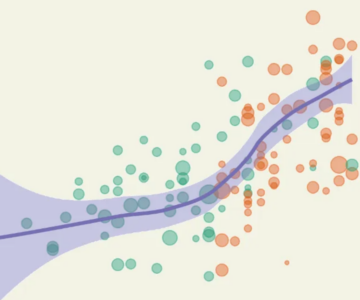 In 1994, a team of Canadian psychologists wondered why people with anxiety worry so much. In the words of Baz Luhrmann, ‘worrying is as effective as trying to solve an algebra equation by chewing bubble gum’. So why spend all this time worrying about what may or may not happen to you?
The psychologists concluded—a radical insight at the time—that worry is not driven by any specific fear, such as the fear that you might lose your job or a loved one may fall ill. Instead, they proposed, worry is driven by the inability to tolerate uncertainty itself. They called this intolerance of uncertainty (IU) and created a questionnaire to measure it, which contained the items listed at the top.
Over the years, researchers built the case that intolerance of uncertainty contributes to anxiety. A recent meta-analysis summarized 26 intervention studies and found that therapies that tackle IU are effective at reducing worry and other anxiety symptoms. During the COVID-19 pandemic, IU had a bit of a moment when researchers showed that a high score on the IU scale was one of the best predictors of pandemic-related anxiety and doomscrolling.
This made me curious about trends in IU itself.
More here.
Enjoying the content on 3QD? Help keep us going by donating now.