
C. Brandon Ogbunugafor in Nature:
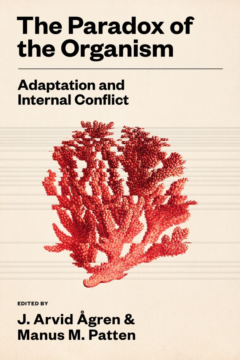 Some thirty-five years ago, biologist Richard Dawkins coined the phrase “paradox of the organism” to encapsulate a conundrum. If genes are ‘selfish’ — driven to increase their own chances of being transmitted to the next generation — some of them might act in ways that harm the organism as a whole.
For example, sections of DNA can ‘jump’ to different parts of the genome, copying themselves into other locations and, thus, shuffling genetic material. Such ‘jumping genes’ constitute nearly half of the human genome and are crucial for driving evolution and increasing genetic diversity. But they can also cause harmful mutations, and even cancer, when their insertion disrupts key genes that regulate cell growth.
In The Paradox of the Organism, leading evolutionary theorists and philosophers explore such conflicts in a series of essays. They consider how a body made of myriad competing constituents can function as a coherent system, finely tuned towards one goal: maximizing the chances of surviving and reproducing.
More here.
Enjoying the content on 3QD? Help keep us going by donating now.