
Miles Kellerman at Aeon:
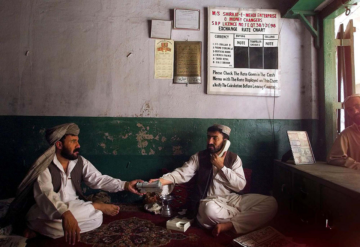 The global financial system is a colossal factory containing an endless web of information assembly lines. Every time you tap your card on a payment terminal, whether it’s for a coffee on the way to work or a new vacuum cleaner, you are sending a new informational signal to that factory. Like raw material, that signal is then loaded on a conveyor belt where it is checked and modified by your bank, the seller’s bank, a payment processor, card network, and other intermediaries as it proceeds. The assembly line may be relatively short for cups of coffee. For more complicated purchases, however, like mortgages and stocks, the transactional chain can become remarkably complex.
But not all transactions take place in this factory. There are, in fact, entirely separate payment networks that operate outside the confines of state-regulated information assembly lines. The Chinese refer to them as feiqian (‘flying money’). Arabic speakers prefer the term hawala, whereas the Indian diaspora operates through a practice called hundi. In English, we have developed an ominous phrase to capture these various informal networks: underground banking.
Such a phrase may evoke images of drug dealers, money launderers and corrupted officials. And, indeed, states have long been concerned about the potential utilisation of these networks for crime and terrorist financing. But numerous scholars have pushed back against this securitised narrative.
More here.
Enjoying the content on 3QD? Help keep us going by donating now.