
Stephen Sims in The New Atlantis:
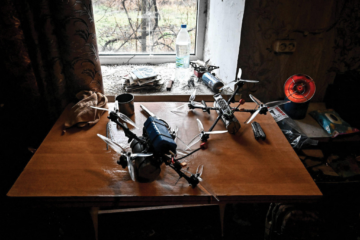 The drones had been trained using AI to recognize Tu-95 “Bear” bombers based on photographs taken of a decommissioned version in a Ukrainian air museum and to recognize the weakest point of the bombers, often the fuel tanks in the wings. This allowed the drones, flying first autonomously and then with human pilots, to strike Russian bombers with high precision as far away as Siberia.
In the grand scheme of geopolitics, these events were small. The conflict between Iran and Israel ended up being more like glorified shadowboxing than real war, and the Ukrainian strike on Russia did nothing to change the relentless, grinding attrition of the front line. These events are not obvious ruptures in international politics, as when nuclear fire consumed Hiroshima and Nagasaki in August 1945. That moment announced with dreadful clarity that the future of war and strategy would never be the same. The use of AI coupled with drones, however, is more like Sputnik in 1957, a seemingly small event that nevertheless drastically altered the human relationship to technology.
More here.
Enjoying the content on 3QD? Help keep us going by donating now.