
by Christopher Hall
There’s a certain problem with the status of the word “criticism” in the phrase “literary criticism.” The critical part seems to be concerned, as criticism is in general, with separating the wheat from the chaff, but the literary part seems already to have made a judgement about quality – as long as we take term “literary” to be evaluative and not referring to a particular genre, distinct from the many forms of popular, commercial fiction. There is a curious void between judgement and analysis in literary studies; in one sense, you are working with a set of texts that have “survived,” that have survived a crucial filter of judgement to become worthy of intense study. Even if literary critical methods can be fruitfully applied to “forgotten works” or even non-literary cultural artifacts, this is an elevating of the object’s status; we don’t do the work of digging out a novel from some hidden corner of the 19th century just to pronounce, finally, that it’s worthless. Literary criticism has thus evolved into thinking of itself as something like an empirical study, which observes but is expected, like polite patrons of a theater, not to judge, at least not too loudly.
In my years as a student of literary studies, I don’t think I encountered – from my professors, at any rate – much literary criticism which was devoted to the evaluative enterprise. If a work of secondary quality was to be discussed, it was under the assumption that it had something of value to say, faults and all. I don’t think much has changed in this regard. Perhaps, as we struggle to define a place for literary study in universities being run like intellectual private equity funds, we ought to reconsider this approach. When evaluation is occurring, it usually happens on the basis of some political failing, some inconsistency with modern moral standards in the object work. I’m talking about something much more basic: students, quite simply, are not being told they have permission to say “this sucks” on a strictly aesthetic basis. This is a shame, because there is both value and a kind of joy in not only declaring that something sucks, but also in carefully teasing out exactly why it sucks.
It may sound like I’m asking that literary criticism in the classroom take back some of the work normally assigned to that other disappearing institution of the reading world – the book review. And indeed, I think that a crucial function of literary study proper is lost if we move it to far away from an evaluative stance. This is not a function of gatekeeping – we are well past the point where we believe that anyone, or even any set of people, can reasonably define a set “canon,” and past the point where we think any firm list of Great Books can possibly be constructed without glaring and grievous omissions, and perhaps a few questionable inclusions. But the distrust of the aesthetic values which are the basis of canon formation has taken us as far as it is going to take us. Yes, aesthetic judgements can be corrupted by a bias aimed against any number things, from the subject matter of the work to the social status of the author. But we’ve decided that corruption is fatal, when we should have been spurred towards greater awareness, refinement and precision. What if we encourage literary students not towards some vague proficiency in “critical thinking” but rather toward a status as the multiform judges of cultural artifacts of all kinds? What, in fact, is the point of critical thinking if we can’t really be critical?
If someone were foolish enough to allow me to develop my own literature program, there would indeed be courses devoted to analysis, but I’d also through in a few with the express demand that students be prepared to make critical assessments. Something along the lines of CRIT1205: Is Ocean Vuong Really That Bad? Vuong is precisely the kind of author that provokes a true critical response – some, like Tom Crewe, excoriate Vuong’s prose, while others, like the late Helen Vendler, hold his poetry in a level of regard. It would to my mind be a shame if Vuong’s work came to be viewed as if the aesthetic question were no longer debateable, or too dangerous to participate in. Even if literary study can take on para-literary works like potboilers and romantasy, there is no reason to think this essentially empirical element should erase the evaluative. The truly critical part of literary criticism is perhaps what prevents it from being a science – but, even if the university administrators who think the rest of human study is a sideshow to the proper STEM main event – this is not, in fact, a strength and not a weakness.
But of course, “value” is a sticky question in itself. Is Vuong’s work valued for the “right” reasons – for its artistic qualities instead of, say, Vuong’s status as a member of two under-represented communities as a gay South Asian? And if we critique Vuong’s work, are we doing so in good faith – not because we sure he’s being elevated to a position his work simply does not warrant? (I actually haven’t read much of Vuong’s stuff, other than a few works of poetry – so far, I’ve found him to have a certain level of felicity with an image, but he also seems too committed to a kind of mawkish, demonstrative melancholia). I want to be clear that I am not making a call for a return to a Leavisite mentality: let’s be rid of the idea that reading a bad book necessarily does us any harm simply in the reading of it. Part of the entire problem with canon formation and the Lifetime Reading List is the suggestion that something is revocably lost if we spend our time reading Onyx Storm instead of Tristan and Iseult. Yes, one could always be reading better books, but one is going to die without having read all of the good, even the great, books anyway. A side trip into commercial fiction or works pretending to a literary quality they don’t have is both harmless – we’re all allowed to have guilty pleasures and derive meaning wherever we like – and also potentially helpful. When I think of what drove me to be interested in literary criticism, I don’t think in particular of the good books I’d read, but rather the moment when I realised Stephen King’s doorstopper IT just wasn’t very good. Sometimes the origin of criticism is not in wanting to articulate why a work has spoken to us on a profound level, but rather why it’s utterly failed to do.
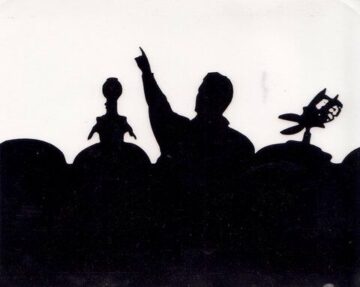
The other place where I cut my teeth on criticism in my teenage years was by watching Mystery Science Theatre 3000. That’s the thing about bad works: they demand talking back to, and unlike the moments of profound inward reflection good works often inspire, we feel better off shouting out loud at the bad ones. Mockery and ridicule can be poisonous impulses, but in the right places they are irreplaceable. The fact that bad movies get made and bad novels and poems get written is not merely indicative of some basic human failing, some incompetence unable to see clearly enough to correct itself. I actually have good deal of sympathy for “bad” works: anyone who is a fan of both Lovecraft and 18th century poetry, as I am, must develop some sort of commitment to finding diamonds in the rough. Bad works are often so because the author has tried something well out of the norm, has explored some territory which, if it did not produce the expected returns, at least has some merit in the fact that it was mapped out at all. But these shards of value emerge precisely because we are attendant to the faults in which they are hiding.
Bad writing and bad thinking are certainly allied, though we might struggle to say which one is more often generative of the other. We do need to be alert to the politics of cultural production, and how, long before AI came around, slop has been an organism very adept at sucking the oxygen out of the room. The best transferable skill which literary study can teach is the ability to counter mental suffocation. We have watched as public and political discourse have devolved to a point where grunts and spittle might be no less articulate and perhaps a little more honest. If we are really committed to the idea that literary criticism has value for the kind of critical thinking it teaches, let’s be clear that there is a special component to the that thinking which is simply not found in abundance elsewhere in the university (where, let’s fact it, just about every discipline teaches something like the need for “critical thinking”). Judgement is a kind of revenge against tired tropes and cliched thinking. As we descend into yet another moment where jingoism replaces actual thought, we are desperately in need of any kind of thinking that is capable of profound and cutting discernment.
Enjoying the content on 3QD? Help keep us going by donating now.