
Jon Baskin at The Point:
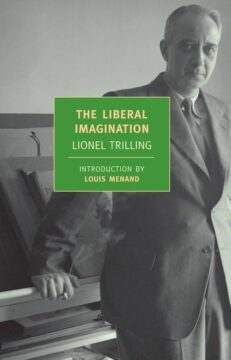 There are understandable reasons why liberal and leftist intellectuals are cautious about discussing the good life. A core tenet of modern liberal theory holds that the job of a just political system is not to tell anyone how to live but rather to give them the freedom and, in its more left-leaning versions, the economic wherewithal, to live as they please. Although there are “perfectionist” strands in the liberal tradition, the most prominent Anglo-American political philosophers over the past half century, from John Rawls and Richard Rorty to Judith Shklar and Martha Nussbaum, have argued for a liberalism that remains rigorously agnostic about ultimate questions, leaving the great spiritual, philosophical and aesthetic projects for the private or semi-private sphere. “Apart from prohibiting interference with the freedom of others,” writes Shklar in her classic 1989 essay “The Liberalism of Fear,” “liberalism does not have any particular positive doctrines about how people are to conduct their lives or what personal choices they are to make.”
The logic of this formulation is both hard to dispute and famously unsatisfying. Rawls, Shklar, Rorty and Nussbaum reached the height of their influence in the last thirty years of the twentieth century, when liberal ideals benefited from their contrast with Soviet totalitarianism as well as an unprecedented middle-class prosperity.
more here.
Enjoying the content on 3QD? Help keep us going by donating now.