
Quico Toro at Persuasion:
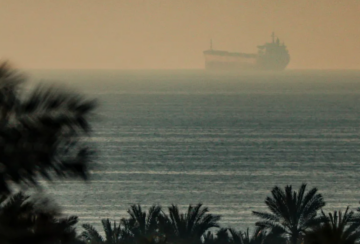 American military planners in the Pentagon have been wargaming scenarios for attacking Iran more or less non-stop since 1979. One major reason president after president stopped short of launching an attack was the frightening realization that the Islamic Republic could always choose to shut down the Strait of Hormuz—that narrow waterway through which roughly a quarter of the world’s oil and a fifth of its liquefied natural gas (LNG) flows every day. Iran could also hit the oil platforms and gas liquefaction facilities of the neighboring Gulf states. It could, in other words, turn off a frightening proportion of the global energy spigot, setting off an energy shock with implications nobody could quite predict.
American strategists cared a lot about the way Iran destabilizes the Middle East. But they cared about energy security, too. Which is one reason why every president from Jimmy Carter on took one look at the war option presented by the Pentagon and said, “yeah, no.”
So what changed? It’s tempting to think the answer is “the man at the top,” and, sure, that’s clearly an important part of the story. But it’s not just about personalities. The strategic weight of Hormuz in the American calculus changed too, because a bunch of geology nerds working for a handful of U.S. energy firms figured out a way to inject water into shale formations at high enough pressure to dislodge the hydrocarbons embedded in the rock.
More here.
Enjoying the content on 3QD? Help keep us going by donating now.