
by Tammy Lai-Ming Ho

For more than forty-three hours, from the afternoon of 26 November 2025 into the morning of 28 November, fire held fast to the towers of Wang Fuk Court in Tai Po, Hong Kong. Authorities later confirmed 168 deaths and 79 injuries, making it the deadliest fire in Hong Kong since 1948.
Wang Fuk Court is an eight-block high-rise estate built in 1983 to house thousands, each residential tower rising to thirty-one storeys. In late 2025 it was also a worksite undergoing major external repairs. Residents described façades wrapped in bamboo scaffolding and green debris-netting, protective boards fixed over windows and openings. When the blaze broke out, it spread to seven of the eight blocks, leaving one largely unscathed but surrounded by heat, smoke, and falling fragments.
Authorities have not issued a final cause. What they have said publicly is narrower and more important than any single dramatic culprit. Preliminary investigations found that some of the construction netting covering the eight buildings did not meet fire safety standards, and flammable expanded polystyrene foam boards covering the windows acted as potential accelerants. These details place attention on choices and oversight, and on whether regulators and contractors allowed combustible protection to become an accelerant. Officials said the rapid spread appeared linked to refurbishment materials, and that criminal and anti-corruption inquiries were under way. For residents, it sounded like an admission that risk had been accepted. The Labour Department had conducted 16 inspections of the site since July 2024, with the final inspection occurring just one week before the fire, yet the work continued.
The fire began in mid-afternoon, a time when many residents were at home. The first critical danger was speed. Smoke invaded corridors and stairwells, heat cracked windows, and burning debris travelled along the outer skin of the estate. In such places, the difference between escape and entrapment is often measured in minutes. The victims’ ages ranged from six months to 98 years, making this disaster feel less like an accident and more like a ledger of lives cut short by systemic failure.
Hong Kong’s reflex for mutual aid still exists, and it showed itself quickly. Restaurants, churches and sports halls in Tai Po opened their doors. Donation points filled with water, food, clothing, nappies and phone chargers. Volunteers organised online to match spare rooms with families who had nowhere to sleep. It was practical kindness, untheatrical and swift.
Grief, too, sought a public form. Near the cordoned estate, mourners began to leave flowers, candles, and handwritten notes at Kwong Fuk Sitting-out Area. The memorial grew into a small bright patch against scorched concrete. On the first Sunday after the fire, thousands queued to lay flowers, with the line stretching along the Lam Tsuen River. Messages among the flowers included “It’s not the bamboo scaffolds that need review, but the system” and “Where is justice?” In another city this might have been taken for a simple sign of shared loss. In Hong Kong it was read through the lens of recent history, where public gatherings carry political weight.
About a week after the government’s three-day official mourning period ended, workers cleared the tributes. On the evening of 7 December, organisers announced the memorial site would close at 11:59 p.m. Volunteers cleared flowers and took down messages as police officers watched on, with personnel from the Food and Environmental Hygiene Department and the Civil Aid Service taking part. By morning, the informal shrine had been swept away. Police said that people at the scene “agreed to leave voluntarily after discussion and coordination,” yet National Security Department Chief Superintendent Steve Li had earlier said the situation was becoming “more and more like that of ‘black-clad violence,’” referencing 2019 pro-democracy demonstrators.
The Weaponisation of Sedition
The suppression extended beyond memorials to the very act of asking questions. On 29 November, university student Miles Kwan Ching-fung was arrested on suspicion of sedition after launching an online petition calling for government accountability. Kwan’s petition urged the government to respond to “four big demands”: ensuring accommodation for displaced residents, establishing an independent investigation committee to look into potential conflicts of interest, reviewing the construction supervision system, and probing regulatory neglect. The petition gained more than 10,000 signatures in less than a day before being deleted. Kwan was later released on bail.
Before his arrest, Kwan and a handful of activists distributed flyers at Tai Po MTR Station. “If these ideas are deemed seditious or ‘crossing the line,’” Kwan said, “then I feel I can’t predict the consequences of anything anymore, and I can only do what I truly believe.” His words proved prophetic. The arrest sent a clear message: demanding accountability for a disaster that killed 168 people could be treated as a threat to national security.
At least three people were arrested for peaceful activism related to the fire, including a volunteer who offered help in Tai Po. Kenneth Cheung, a former district councillor, was arrested on 1 December after posting news reports on Facebook seen as critical of the Chinese government. “I shared articles that moved me and had no intention to test national security’s limits,” Cheung said. “I really have no idea where their red line lies.”
Chief Executive John Lee framed this posture as the defence of social unity, warning that “for anybody who tries to sabotage the commitment of society, I will do all I can to ensure justice is done.” Security Bureau chief Chris Tang Ping-Keung accused people of spreading misinformation and characterised such acts as “destabilizing Hong Kong.” Beijing’s Office for Safeguarding National Security issued a statement warning against “anti-China and ill-intentioned individuals” attempting to exploit the tragedy to cause unrest.
Intimidating the Press
Control was asserted not only over gatherings and petitions, but over the telling of the story itself. In early December, the Office for Safeguarding National Security summoned international journalists on 6 December to warn them against spreading false information. Journalists from The New York Times and Agence France-Presse were among those called to the meeting, where an official read a statement accusing “hostile foreign forces” of disparaging the government with distorted facts. The unnamed officials did not explicitly outline any particular report they disliked, nor did they allow questions during the meeting. Officials said foreign journalists would face consequences if they were deemed to have violated the law, adding: “Do not say you have not been warned.”
The Office for Safeguarding National Security stated that “some foreign media have recently reported on Hong Kong ignoring the facts, spreading false information, distorting and smearing the government’s disaster relief and aftermath work.” Yet no specific examples were provided, leaving journalists to navigate an undefined red line. This deliberate ambiguity serves a purpose: when the boundaries of acceptable speech are unclear, self-censorship becomes the safest option.
The Committee to Protect Journalists condemned the harassment, calling on authorities to allow media to freely cover the city’s most deadly fire in decades. The International Federation of Journalists condemned any attempts at intimidating media workers reporting in the public interest. Yet the warnings had their intended effect. At least two people who gave interviews to foreign media about the fire later indicated on social media that the government had pressured them to stop.
This pattern of intimidation extends beyond professional journalists. On one university campus, plastic barricades were erected to cover up signs posted on the student union’s message board calling for justice for the victims, and the university suspended the union soon after.
A System That Ignored Warnings
Against this tightening of expression ran another reality that could not be managed away: public anger at the scale of the loss, and the suspicion that it was foreseeable. Residents raised concerns about construction netting material as early as September 2024, more than a year before the fire. Wang Fuk Court residents had previously protested the hiring of the maintenance company with a poor compliance record, alleging bid-rigging and corruption, and filed safety complaints about building materials, which authorities ignored.
Investigators examined safety breaches linked to the renovation contractors. Prestige Construction had a prior history of safety violations, including two convictions in November 2023 and three fines totalling HK$30,000 in 2023. Officials alleged that contractors purchased more fire-safe netting and wrapped it only around ground floors to pass inspections, while using cheaper flammable materials on upper floors. “The suspects are very cunning,” said Chief Secretary Chan Kwok-ki. “For very little profits, they take the lives of many people.”
By January 2026, police had arrested 22 people in connection with the blaze—16 on suspicion of manslaughter—while the Independent Commission Against Corruption had arrested a further 14 on suspicion of corruption. Those detained included company directors, engineering consultants, and scaffolding subcontractors. Investigators found that 2,300 rolls of non-compliant netting had been knowingly purchased at a lower cost than fire-retardant material, with compliant netting installed only at the base of scaffolding to pass inspections while cheaper, flammable material was used on upper floors. An Independent Committee—chaired by senior judge David Lok but notably lacking the statutory powers of a formal Commission of Inquiry—held its first public hearing on 5 February 2026. Its first round of evidential hearings is scheduled to begin on 19 March, with residents set to testify.
Properly done, such an inquiry can establish more than the mechanics of flame. It can examine procurement, supervision, conflicts of interest, and the mundane ways in which warnings are ignored until they become sirens. Yet the committee’s limited mandate is already a point of contention: without statutory powers, it cannot compel witnesses or evidence in the way a formal Commission of Inquiry could, and in a climate where criticism has been treated as disloyalty, transparency is never guaranteed by the mere existence of a panel. On the question of housing, the government’s 2026 budget set aside HK$4 billion in public funds toward a total HK$6.8 billion buyout of the seven fire-ravaged blocks, with the remainder drawn from a private relief fund. On-site redevelopment has been ruled out. More than 1,100 residents have petitioned to rebuild on the same land; as of early March, they are still waiting for an answer. Residents of the destroyed blocks may be permitted to return briefly to retrieve belongings as early as late April.
The Broader Context: From Grenfell to Wuhan
This tragedy echoes patterns seen in other authoritarian responses to disaster. After the 2008 Sichuan earthquake, the 2011 Wenzhou high-speed rail collision, and the 2022 Covid outbreak in Wuhan, Chinese authorities imprisoned citizens calling for accountability, muzzled whistle-blowers and victims’ families, censored information, and even destroyed evidence. The Wang Fuk Court response follows this playbook: suppress dissent first, investigate later, and ensure that the narrative of state competence remains intact.
The parallels to London’s Grenfell Tower fire are striking. Both involved flammable cladding, regulatory failures, and marginalised communities. But where Grenfell survivors could publicly demand accountability, organise campaigns, and speak freely to the press, Hong Kong’s survivors now navigate a legal landscape where similar actions risk arrest under national security laws.
For survivors, the politics of speech is inseparable from the basics of recovery. Housing, compensation, medical care, schooling, and the slow work of rebuilding a life are the practical measures by which any response will be judged. The psychological burden is harder to tabulate. Many will live with the sensory residue of smoke, with the memory of stairwells turned opaque, with the knowledge that a familiar home became a trap in the space of an afternoon.
A Test of Honest Speech
The Wang Fuk Court fire was a disaster of materials and management, of dense living and combustible protection, of regulation tested and found wanting. Its aftermath has become, for many Hongkongers, a disaster of civic space as well. Flowers were removed, petitions chilled, journalists warned, and students arrested. The city’s most basic human gestures, to mourn in public and to ask how this could happen, were treated with mistrust.
A tragedy on this scale should open a society, even briefly, to candour and reform. It should allow people to grieve without being policed, and to question without being criminalised. The government has promised investigation and reform. Whether it can also allow honest speech, and whether the dead will be honoured with truth rather than managed silence, is the harder test. Three months on, that test has largely been failed. The flowers were cleared. The petitions were silenced. The journalists were warned. A student was expelled. The evidential hearings—the official reckoning—begin on 19 March. What they produce, and whether those findings can be spoken about freely, will be the measure of what Hong Kong’s civic space now permits.
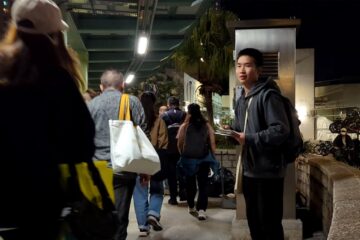
The consequences have since extended even further. Miles Kwan Ching-fung, the 24-year-old Chinese University of Hong Kong student who had launched the online petition calling for accountability after the fire, was expelled by his university following a disciplinary review. Kwan had already been arrested on suspicion of sedition after distributing leaflets urging an independent investigation into the disaster. The petition he initiated gathered more than 10,000 signatures before it was removed from the internet. The university stated that he had committed “multiple acts of misconduct,” though Kwan said the disciplinary process was triggered by his arrest and conducted under circumstances he believed were predetermined. Having completed his academic requirements and due to graduate this month, he instead found his studies terminated after six years at the institution.
The episode illustrated how the boundaries of permissible speech had tightened even within spaces traditionally associated with debate and inquiry. A student who asked how 168 people died in a preventable fire was first detained under national security powers, and later expelled from his university. As of this writing, three people face prosecution on sedition-related charges. In the aftermath of a disaster that demanded scrutiny, the cost of asking questions continues to rise.