
Taran Dugal at The New Yorker:
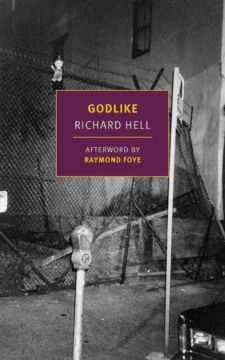 Though “Godlike” is inseparable from the downtown scene in which it is set, the word “punk” fails to make an appearance in the book. In fact, save for an isolated reference to Andy Warhol, most of the prominent cultural figures of that era go unmentioned. The novel concerns itself, instead, with the fictitious poets Paul Vaughn and R. T. Wode, the former a twenty-seven-year-old member of the East Village literati, the latter his teen-age male lover. For a hundred and forty pages—which, we are told at the outset, comprise the journals of the now fifty-three-year-old Vaughn, housed in a psychiatric unit on the Upper East Side—Hell charts their relationship in vaulting prose that jumps with audacious velocity from the sacred (“This I love, to be borne by love. The only person to tell it to is Jesus. My head is a church”) to the pornographic (“What does the tiny spurt from Cupid’s penis taste like? Like displaced space”).
Vaughn and Wode have sex in back alleys, decrepit apartments, motels, and hotels. They take LSD in gelatine form and write frenetic poetry and have even more sex. They drink to excess in storied haunts of seventies New York (at one point, Vaughn recalls how Wode “stood on a tabletop in the noisy little dark back room of Max’s Kansas City and pissed into a champagne glass”) and spend “the greatest amount of their time together reading and writing and sometimes talking” in Wode’s apartment.
more here.
Enjoying the content on 3QD? Help keep us going by donating now.