
Kathryn Schulz at The New Yorker:
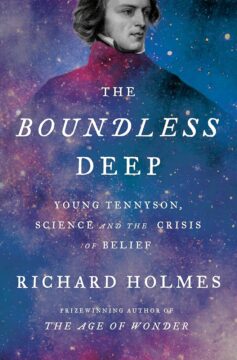 The Romantics were Tennyson’s immediate predecessors, so perhaps it is unsurprising that Holmes returns to the theme in his new book, “The Boundless Deep: Young Tennyson, Science and the Crisis of Belief” (Pantheon). The title suggests that Holmes, too, is interested in Tennyson’s fascination with unknowable immensities, but it is the subtitle that makes plain the book’s central claim: that the crucial factor in the poet’s formative years was the scientific advances of the nineteenth century and the challenge they posed to conventional Christian faith. This is a plausible assertion, given that, by the time Tennyson entered adulthood, the British intellectual class—and, for that matter, much of the rest of the world—had been turned on its head by scientific breakthroughs, above all in geology and astronomy.
The revolution in geology had to do with time. In Tennyson’s youth, geologists amassed evidence in support of the proposition, first floated in the previous century, that the age of the earth was not measurable in the familiar and Biblically sanctioned sum of thousands of years but, rather, in untold billions. That elongated sense of our planetary past helped make room for a new understanding of certain strange creatures that had begun rearing their fearsome fossilized heads and tails and teeth into the public consciousness when Tennyson was in his early teens—the Megalosaurus, named and described in 1824, and the Iguanodon, named and described in 1825.
more here.
Enjoying the content on 3QD? Help keep us going by donating now.