
Stephen Westich at The Hedgehog Review:
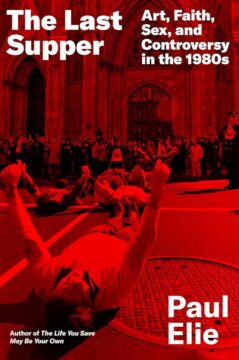 Investigating the crypto-religious is Elie’s venture in this book. Readers of Elie’s first two books, The Life You Save May Be Your Own and Reinventing Bach, will be familiar with his interest in complicating the boundary between secular and sacred with close readings of literary and musical works through the lens of their makers’ spiritual struggles and developments. One way he expands on these ideas in The Last Supper is by foregrounding the visual arts in his analysis. But a second, more central expansion comes from his concept of the crypto-religious. He borrows the term from the Polish poet Czesław Miłosz, who wrote to Thomas Merton that “I have always been crypto-religious and in a conflict with the political aspect of Polish Catholicism.” For Miłosz, this meant concealing his religious inclinations within his homeland’s Communist regime and alluding to early Christians hiding in Roman crypts. Elie expands the phrase to cover much more: “Crypto-religious art is work that incorporates religious words and images and motifs but expresses something other than conventional belief. It’s work that raises the question of what the person who made it believes, so that the question of what it means to believe is crucial to the work’s effect: as you see it, hear it, read it, listen to it, you wind up reflecting on your own beliefs.”
more here.
Enjoying the content on 3QD? Help keep us going by donating now.