
David Mason at The Hudson Review:
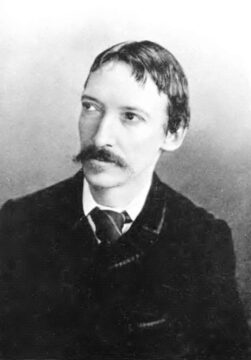 The adventure story and the historical romance were two genres at which Stevenson excelled, but he was also brilliant at the macabre psychological parable in his novella The Strange Case of Dr. Jekyll and Mr. Hyde (1886), and the supernatural in his short story “Thrawn Janet” (1881). The first of these takes on the very “fortress of identity” (in Jekyll’s words) that has so obsessed us of late but turns it into something timeless. Damrosch tells us that the novella caused a furious argument between Stevenson and his wife, in which she comes off better than he does. When Louis read aloud his first draft, as Fanny’s son Lloyd recalled, “Her praise was constrained; the words seemed to come with difficulty; and then all at once she broke out with criticism. He had missed the point, she said; had missed the allegory; had made it merely a story—a magnificent bit of sensationalism—when it should have been a masterpiece.” Damrosch continues, “Fanny’s point was that Louis had ruined the story by turning it into a mere tale about a secret life. . . . What was needed was not just a character wearing a disguise, but something far more profound: a character struggling with a deeper hidden self that breaks loose and fights for supremacy.” Louis resisted, then came around, went back to work, and gave her the masterpiece she wanted. Thereafter, he jokingly referred to her as “the critic on the hearth.”
more here.
Enjoying the content on 3QD? Help keep us going by donating now.