
by Amir Zadnemat
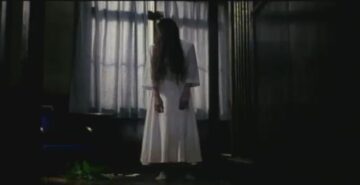
Japanese horror rarely treats space as neutral background. Rooms, corridors, and thresholds do not simply contain events; they remember them. In many films, especially those that extend the legacy of kaidan jidaigeki into the present, architectural space functions as a kind of soft archive—absorbing gestures, voices, and injuries, then releasing them slowly back into the frame. Terror is not what enters the house; it is what the house has learned to hold.
This begins with an older grammar of place. In Edo-period ghost tales, the home is not a private refuge but a node in a dense network of obligation. Walls are thin, doors slide, and status is legible in the arrangement of rooms. Violence and humiliation unfold in spaces that never fully close. When a servant is beaten in a back corridor or a wife is cast out into a side yard, the architecture witnesses the act. Later, when a ghost reappears in that same corridor or at that same threshold, she is less an intruder than the room’s own memory made visible.
What distinguishes Japanese horror from many Western haunted-house narratives is this refusal to separate space from social structure. The cursed location is not evil in itself; it is overdetermined. A stairway is oppressive because it has channeled generations of unequal encounters up and down its steps. A tatami room feels haunted because it has seen too much bargaining, too many apologies offered in place of real repair. The supernatural does not burst through the floorboards; it condenses out of an atmosphere already thick with unspoken history.
Modern J-horror relocates this logic without abandoning it. High-rise apartments, school corridors, and hospital wards replace feudal compounds, but they inherit the same double life: practical architecture by day, mnemonic device by night. A narrow hallway in a Tokyo apartment block is built for circulation, yet the camera lingers until it feels like a corridor of stalled decisions. Elevators, stairwells, and public baths become spaces where the routines of urban life intersect with residues that refuse to be cleared out by renovation or demolition.
Technology in these films often extends space rather than escaping it. The videotape in Ringu, or the cursed file in later digital horrors, does not abolish the haunted room; it reproduces it. Each screen becomes a portable chamber, a new surface on which the same unfinished event can replay. The viewer is no longer summoned to a specific house on the outskirts of the city; the house arrives in the viewer’s own living room. Architecture disperses, but the logic of haunted space—its insistence that places remember what was done inside them—remains intact.
Doors and thresholds carry particular weight. In many Japanese horror films, what terrifies is not the creature beyond the door but the door’s refusal to stay in one moral register. The sliding panel that once marked the boundary between public and private becomes unstable: it hides what should be seen and reveals what was meant to stay politely unacknowledged. When a hand appears from behind a fusuma, or a figure stands just inside the genkan, the shock comes from recognizing that the line between “inside” and “outside”—between safe and unsafe, past and present—was always more porous than we wanted to believe.
Even empty frames participate in this economy of memory. Long, static shots of unoccupied rooms are a staple of Japanese horror not because nothing is happening, but because the film is allowing the space itself to speak. A kitchen at night, a classroom after school, a bathhouse between customers: these are images of pause, but not of peace. The longer the camera waits, the more the viewer becomes aware of prior uses, of routines that have worn grooves in the air. When a ghost finally crosses the frame, it feels less like an arrival and more like an acknowledgment of what the room has been holding all along.
In this way, Japanese horror proposes a quiet but unsettling claim: that spaces do not forget as easily as people do. Renovation, relocation, and urban development promise clean slates, yet the films insist on continuities that plaster cannot cover. A new tenant moves in, a company changes ownership, a school repaints its hallways—but the framing remains, and with it the patterns of who is heard, who is dismissed, and who is sacrificed when the system demands it. The haunting registers that persistence.
Fear, then, is not only of ghosts but of the built environment itself—of the possibility that the places we rely on to stabilize our lives have been silently accumulating grievances. A corridor that always feels slightly too long, a bathroom mirror that reflects more than the present moment, a subway platform where the air seems heavier than it should be: these are not special effects, but cinematic ways of asking what our spaces have witnessed on our behalf.
Japanese horror does not answer that question directly. It lets the rooms answer, slowly.
***
Enjoying the content on 3QD? Help keep us going by donating now.