
Elias Garcia-Pelegrin, Alexandra K Schnell, Clive Wilkins, and Nicola S Clayton at the NIH:
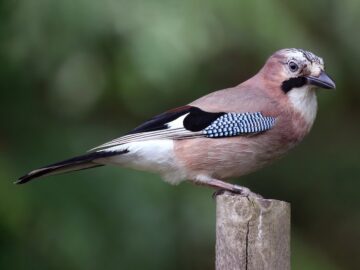 In recent years, scientists have begun to use magic effects to investigate the blind spots in our attention and perception [G. Kuhn, Experiencing the Impossible: The Science of Magic (2019); S. Macknik, S. Martinez-Conde, S. Blakeslee, Sleights of Mind: What the Neuroscience of Magic Reveals about Our Everyday Deceptions (2010)]. Recently, we suggested that similar techniques could be transferred to nonhuman animal observers and that such an endeavor would provide insight into the inherent commonalities and discrepancies in attention and perception in human and nonhuman animals [E. Garcia-Pelegrin, A. K. Schnell, C. Wilkins, N. S. Clayton, Science 369, 1424–1426 (2020)]. Here, we performed three different magic effects (palming, French drop, and fast pass) to a sample of six Eurasian jays (Garrulus glandarius). These magic effects were specifically chosen as they utilize different cues and expectations that mislead the spectator into thinking one object has or has not been transferred from one hand to the other.
More here.
Enjoying the content on 3QD? Help keep us going by donating now.