
Jon Repetti at the LARB:
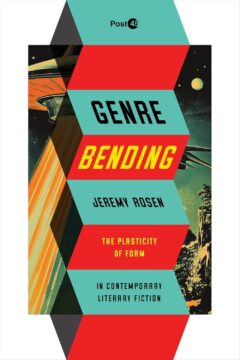 IT’S 2025, and the turn to genre is old news. Since at least the 1980s, writers of “literary fiction” have been adopting the forms and techniques of popular “genre fiction”—a huge category that includes detective novels, sci-fi, spy thrillers, fantasy, horror, Westerns, and all varieties of romance. By 2012, China Miéville could tell the Edinburgh World Writers’ Conference that it had already become “a cliché to point out that generic tropes are infecting the mainstream.” As ever, it seems that the academics are the last to know. Thirteen years after Miéville’s much-cited remark, Jeremy Rosen’s Genre Bending: The Plasticity of Form in Contemporary Literary Fiction can still advertise itself as “the first monograph to address this phenomenon.” (We’ll take the author at his word, while noting that the institutional history of this turn has been told and retold, with the usual variations and hair-splitting, by a number of Rosen’s colleagues: Mark McGurl, Dan Sinykin, and Sarah Brouillette, among others.)
The basic story goes something like this. With the rise of mass culture in the late 19th century, certain prose writers sought to distinguish themselves as makers of “serious art,” cordoning off their work from the crowd of potboilers, bodice rippers, and other products of Grub Street. Building on the example of a few forebears (Gustave Flaubert and Henry James chief among them), the modernists systematized this great divide as a collective project of resistance to market logics in the realm of art.
more here.
Enjoying the content on 3QD? Help keep us going by donating now.