
Conor Feehly at Noema Magazine:
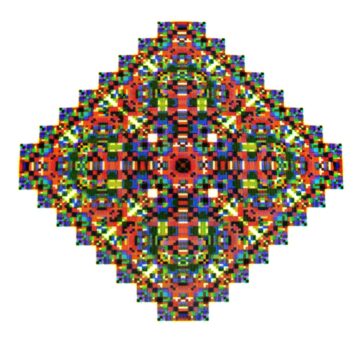 Matthew Egbert, a computer scientist at Auckland University in New Zealand, has spent the last 15 years building computational models of autopoietic systems in their most basic form. These “cellular automata” help test ideas like autopoiesis outside of the complicated world of biology, where disentangling all the complex chemical machinery of living cells is nearly impossible.
Egbert is fascinated by an idea called “viability-based behavior,” which he described as “something special autopoietic systems can do that non-autopoietic systems cannot do.” Unlike, say, a rock or even a complex machine, autopoietic systems actively behave in ways that promote their own survival. This could be as simple as a bacterium moving toward warmer, more hospitable conditions. In this case, the organism modifies its immediate environment to promote its own health.
This notion echoes a characteristic of living systems called niche construction, whereby organisms actively regulate and modify features of their environment to create conditions that enhance their survivability. Humans build houses, beavers build dams, birds build nests. But even the simple act of movement, of choosing to take one path toward a more favorable location, is a minimal example of viability-based behavior. “It’s not just that the environment is posing a problem that the organism has to solve, but the organism is also affecting the environment, influencing it and selecting it,” Egbert said.
more here.
Enjoying the content on 3QD? Help keep us going by donating now.